Published on January 22, 2026.
The mental health landscape changes constantly. Every week, new therapy terms seem to show up everywhere: on social media, in podcasts, or in conversations with friends. You’ve probably heard names like CBT, EMDR, IFS, or somatic therapy, often without much explanation.
That’s why we’re breaking it all down. Based on Zencare’s 2025 Mental Health Report, certain therapy approaches are becoming more popular among people seeking care. In this series, we explain what these specialties actually are, how they work, and who they may be a good fit for.
Today, we’re focusing on Internal Family Systems (IFS) therapy. You can also explore the full Mental Health Report for a broader look at trends, or find an IFS-trained therapist on Zencare when you’re ready.

What is internal family systems (IFS) therapy?
Internal Family Systems (IFS) is a therapy approach that views the mind as being made up of different “parts,” each with its own role, emotions, and beliefs.
Rather than seeing these parts as problems to eliminate, IFS treats them as meaningful and protective. The goal isn’t to get rid of parts like anxiety, self-criticism, or avoidance, but to understand them and help them function in healthier ways.
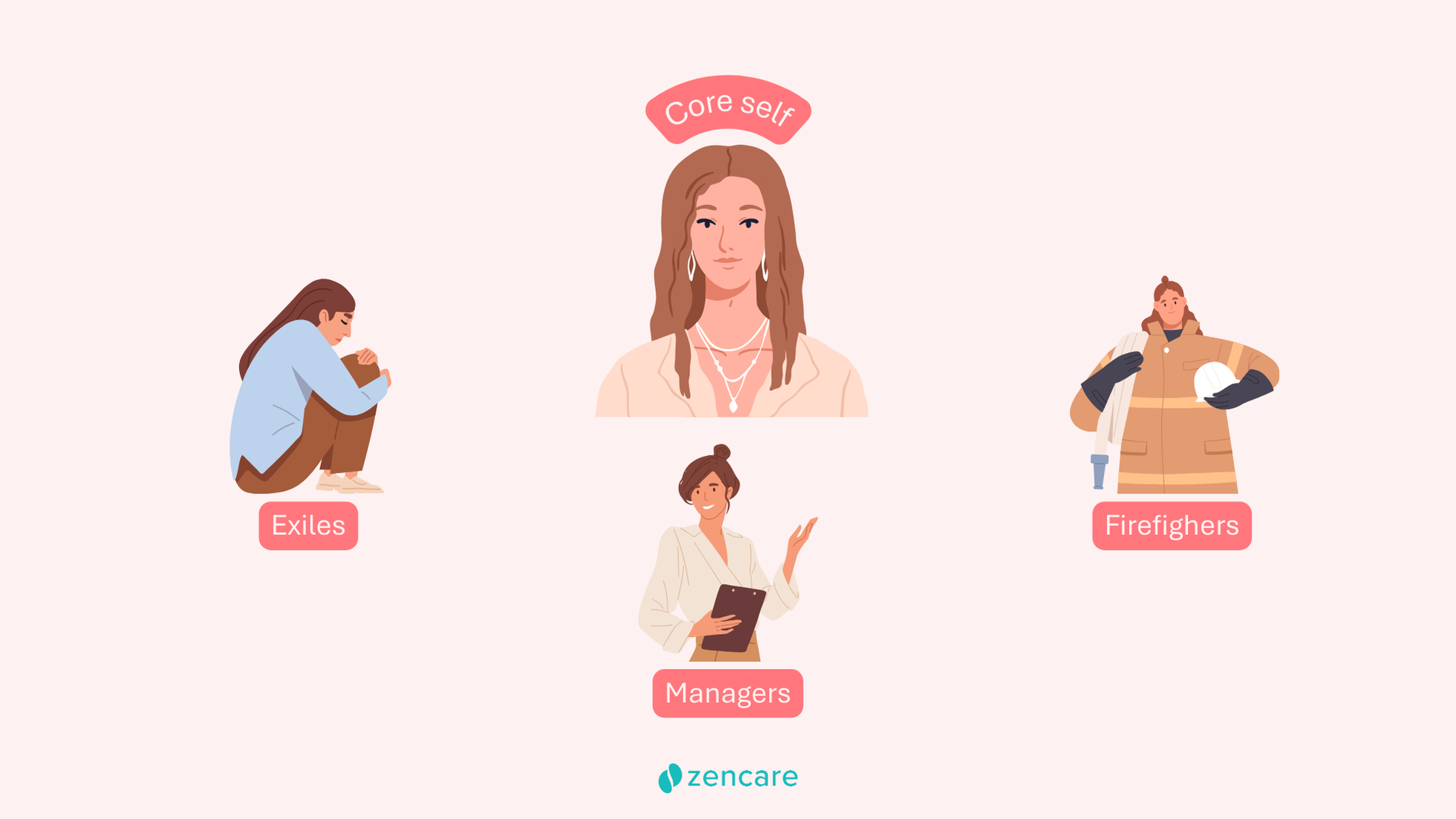
At the center of IFS is the idea that everyone also has a core Self: a calm, compassionate, grounded state that can lead and heal these parts.
How does IFS work?
IFS helps people identify, understand, and heal their internal parts through guided self-exploration.
In IFS, parts are often grouped into three categories:
- Managers: parts that try to keep you in control or prevent pain (perfectionism, people-pleasing)
- Firefighters: parts that react when pain surfaces (avoidance, numbing, impulsive behaviors)
- Exiles: parts that carry wounds from past experiences (shame, fear, grief)
With the support of a therapist, you learn to approach these parts with curiosity rather than judgment, allowing them to release extreme roles and unburden painful experiences.
What are the 8 C’s of IFS?
The 8 C’s describe the qualities of the core Self in IFS therapy. When someone is in Self-energy, they often experience:
- Calm
- Curiosity
- Clarity
- Compassion
- Confidence
- Courage
- Creativity
- Connectedness
IFS therapy helps increase access to these qualities so the Self can lead, rather than reactive or protective parts running the show.
Does IFS therapy work?
Many people find IFS highly effective, especially for emotional healing and self-understanding.
IFS is commonly used to treat:
- Trauma and PTSD
- Anxiety
- Depression
- Attachment and relationship issues
- Shame and self-criticism
- Emotional regulation difficulties
People often report feeling more internal clarity, self-compassion, and emotional relief as they learn to work with, rather than fight against, their inner experiences.

Is IFS evidence-based?
Yes. Internal Family Systems is considered an evidence-based therapy.
Research has shown IFS to be effective for trauma-related conditions, anxiety, depression, and chronic emotional distress. It continues to gain recognition and clinical support, particularly for trauma-informed care.
As research grows, IFS is increasingly used alongside other established approaches in both private practice and clinical settings.
What happens in an IFS therapy session?
IFS sessions are typically reflective and experiential.
A session may involve:
- Identifying a part that’s showing up strongly (like anxiety or self-criticism)
- Exploring how that part feels and what it’s trying to protect
- Separating from the part enough to observe it with curiosity
- Understanding the part’s role and underlying needs
- Helping wounded parts feel heard and supported
Sessions often feel calm and internal, with less focus on advice-giving and more on guided self-exploration.
How is IFS different from traditional talk therapy?
Unlike therapies that focus on changing thoughts or behaviors directly, IFS emphasizes internal relationships.
Rather than asking, “How do we stop this feeling?” IFS asks, “What is this part trying to protect, and what does it need?”
This approach can feel especially validating for people who have felt frustrated by trying to “fix” themselves.
Who is IFS a good fit for?
IFS may be a good fit if you:
- Feel torn between conflicting emotions or behaviors
- Struggle with self-criticism or shame
- Want a non-pathologizing approach to therapy
- Are interested in deeper emotional or trauma-informed work
- Prefer curiosity and compassion over problem-solving
How can I find an IFS therapist?
Because IFS requires specific training, working with an experienced provider matters.
On Zencare, you can:
- Filter for therapists trained in IFS
- Watch intro videos to understand their approach
- See availability, specialties, and insurance options
- Book directly with therapists who feel like a good fit
If IFS sounds like something you’d like to explore, finding the right therapist can make the process feel safer and more effective.