Published on November 24, 2025.
Why Does Abandonment Hurt So Deeply?
Abandonment issues aren't about being clingy or too sensitive. They’re emotional scars formed when our need for connection, especially early in life, was met with absence, neglect, or inconsistency. They stick with us and quietly shape how we relate to others as adults.
Picture this: you text someone close to you, a partner, friend, maybe even a parent, and hours go by with no reply. Your stomach drops. Thoughts race. Did I say something wrong? Are they mad? Are they going to leave me?
That spiraling fear? It might not be just anxiety. It could be abandonment issues showing up.
This guide breaks it down: what abandonment issues really are, where they come from, how they show up in relationships, and most importantly, how to heal.

What Are Abandonment Issues?
Abandonment issues are the deep-rooted fear that the people we love or rely on will leave us, emotionally, physically, or both. Sometimes that fear comes from real events, like a parent leaving or a traumatic breakup. Other times, it's the result of emotional neglect. Someone was there, but they didn’t really show up for you.
You might not realize you’re struggling with abandonment. It doesn't always look like panic. It can show up as overthinking when someone is quiet, keeping people at a distance, or needing constant reassurance.
Here’s the key: abandonment issues aren't a flaw or personality defect. They’re a survival response from a time when you needed connection and didn’t get it.
Takeaway: If you’re scared people will leave, that doesn’t make you needy. It means you’re human, and your past experiences taught you to be cautious. And those patterns can change.
Where Do Abandonment Issues Come From?
Abandonment fears usually start with experiences where emotional safety was missing. That can happen in childhood, but it can also build up over time in adult relationships.
Common origins of abandonment issues include:
- Inconsistent or neglectful parenting. Maybe your caregivers were loving sometimes but cold or distant at other times. That unpredictability creates confusion and anxiety.
- Loss of a parent. Whether through death, divorce, or separation, losing a caregiver early on can leave lasting emotional holes.
- Emotional unavailability. Some people grew up with parents who were physically present but emotionally disconnected.
- Betrayal in adulthood. Infidelity, ghosting, and being blindsided by breakups can reawaken or reinforce older abandonment wounds.
- Repeated rejection. Being bullied, constantly let down, or made to feel like you're too much can teach you that connection equals risk.
Over time, your nervous system learns: don't get too close, it might not be safe. And that becomes your default until you consciously choose to heal it.
Takeaway: Abandonment issues aren't just about childhood. They can come from a lifetime of people not showing up when you needed them. Understanding the root helps you start untangling it.
Signs You Might Be Struggling with Abandonment Issues
Abandonment wounds aren’t always obvious. They often hide in patterns you’ve gotten used to, things that feel normal but are actually protective responses to old hurt.
Here are some signs to look out for:
- You panic when someone takes a long time to text back or seems distant.
- You say “yes” when you want to say “no” because you’re scared of being rejected.
- You either cling tightly or completely withdraw when things get too emotional.
- You constantly seek reassurance but still feel unsure.
- You find it hard to trust others or yourself.
- You sabotage good relationships out of fear they’ll end anyway.
Sound familiar? You're not broken. These are coping mechanisms that once helped you feel safe, even if they no longer serve you now.
Takeaway: Recognizing the signs of abandonment issues is the first powerful step toward healing. You can’t change a pattern you don’t see.
How Abandonment Issues Affect Adult Relationships
Abandonment fears don't just live in your head. They show up in your relationships in ways that feel confusing or painful.
You might develop:
- Anxious attachment. You crave closeness but constantly worry your partner is pulling away.
- Avoidant attachment. You keep your guard up, not because you don’t care, but because vulnerability feels risky.
- Emotional dependency. You feel lost without the other person and rely on them for validation or a sense of self-worth.
- Jealousy or controlling behaviors. You try to prevent abandonment before it happens.
- Pushing people away. You test or sabotage relationships to avoid being the one who gets hurt first.
These dynamics can become exhausting, for you and for the people you love.
Takeaway: If relationships feel like a cycle of closeness and panic, you’re likely responding to old wounds rather than present realities. Awareness opens the door to change.
The Science Behind the Pain: Attachment and the Nervous System
Let’s talk about what’s really going on under the surface.
Humans are wired to connect. Our brains and bodies depend on safe relationships for survival. That’s why abandonment hurts. It’s not just emotional, it’s biological.
From birth, we rely on our caregivers for safety and comfort. When those needs aren’t met consistently, our nervous system learns that connection equals danger. That’s how attachment wounds form.
Later in life, even small things, like someone being less responsive, can activate those old fear responses. Your body may react as if you’re under threat, even if nothing is actually wrong.
You might freeze, shut down, lash out, or become anxious, all in an effort to stay safe. These responses aren't irrational. They're your nervous system trying to protect you the best way it knows how.
Takeaway: Your reactions make sense. They’re old survival strategies, not character flaws. The good news is, your nervous system can be rewired.
How to Heal Abandonment Issues: A Step-by-Step Path
Healing abandonment issues doesn’t mean pretending you don’t care or pushing people away. It means learning how to feel safe in your own skin and in your relationships.
Here’s a roadmap for healing:
1. Name the Fear
Start by noticing your patterns.
- What situations trigger panic, withdrawal, or overthinking?
- Call it what it is: fear of abandonment. Bringing it into the light takes away some of its power.
2. Regulate Your Nervous System
You can’t think your way out of a nervous system response.
- Practice breathwork like box breathing or 4-7-8 breathing.
- Try grounding techniques such as focusing on your senses or naming what you see.
- Move your body. Even stretching or shaking can release stored tension.
3. Challenge Limiting Beliefs
Abandonment wounds often come with harsh inner narratives. Try reframing them:
- “Everyone leaves me” becomes “Some people left, but not everyone will.”
- “I’m too much” becomes “My emotions matter, and I deserve to be supported.”
4. Build Trust, One Step at a Time
Seek out emotionally safe people and allow closeness to develop slowly.
- Notice when you're projecting the past onto the present.
- Set boundaries and respect others. This builds real trust.
5. Work with a Trauma-Informed Therapist
Some patterns go deep. Therapy helps you reprocess old pain and build emotional safety. Look into approaches like:
6. Create Emotional Safety Daily
Healing isn’t a one-time thing. It’s a practice.
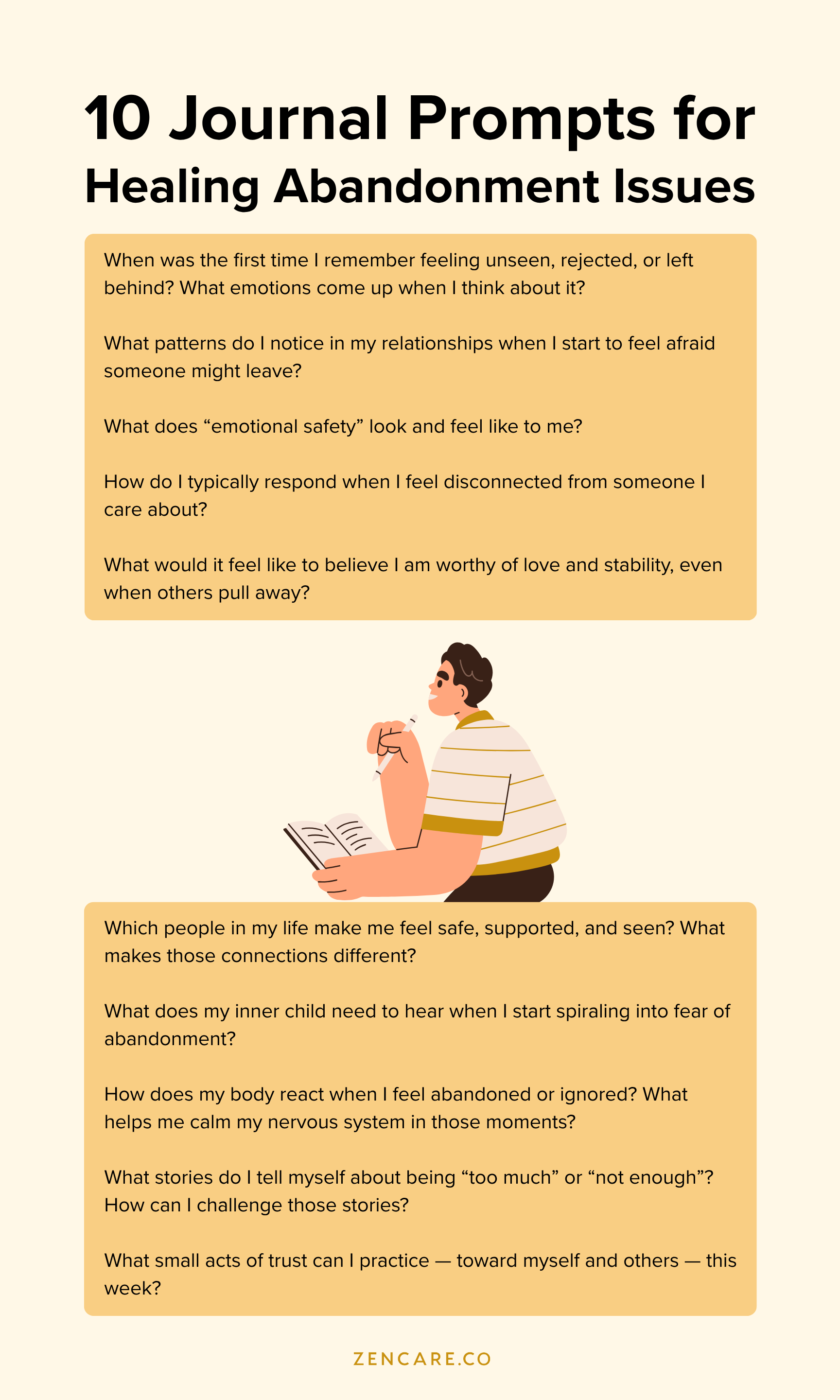
- Journal to process thoughts and uncover triggers.
- Use mindfulness to slow down reactions.
- Practice self-compassion. Talk to yourself kindly during tough moments.
- Set internal boundaries and pause before reacting.
Takeaway: Healing is a slow, layered process. You don’t need to do it perfectly. You just need to keep showing up for yourself.
Self-Help Strategies for Daily Coping
You don’t have to wait until you’re in crisis to work on healing. Small, everyday practices can help you feel more grounded and less reactive.
Try this:
Journaling prompts:
- “What’s the first time I remember feeling abandoned?”
- “What part of me is scared right now?”
- “What do I need in this moment?”
Mindfulness:
- Learn to observe your thoughts without believing all of them
- Use meditation apps or body scans to stay present
Reparenting
- Imagine giving your younger self what they needed, like comfort or kindness.
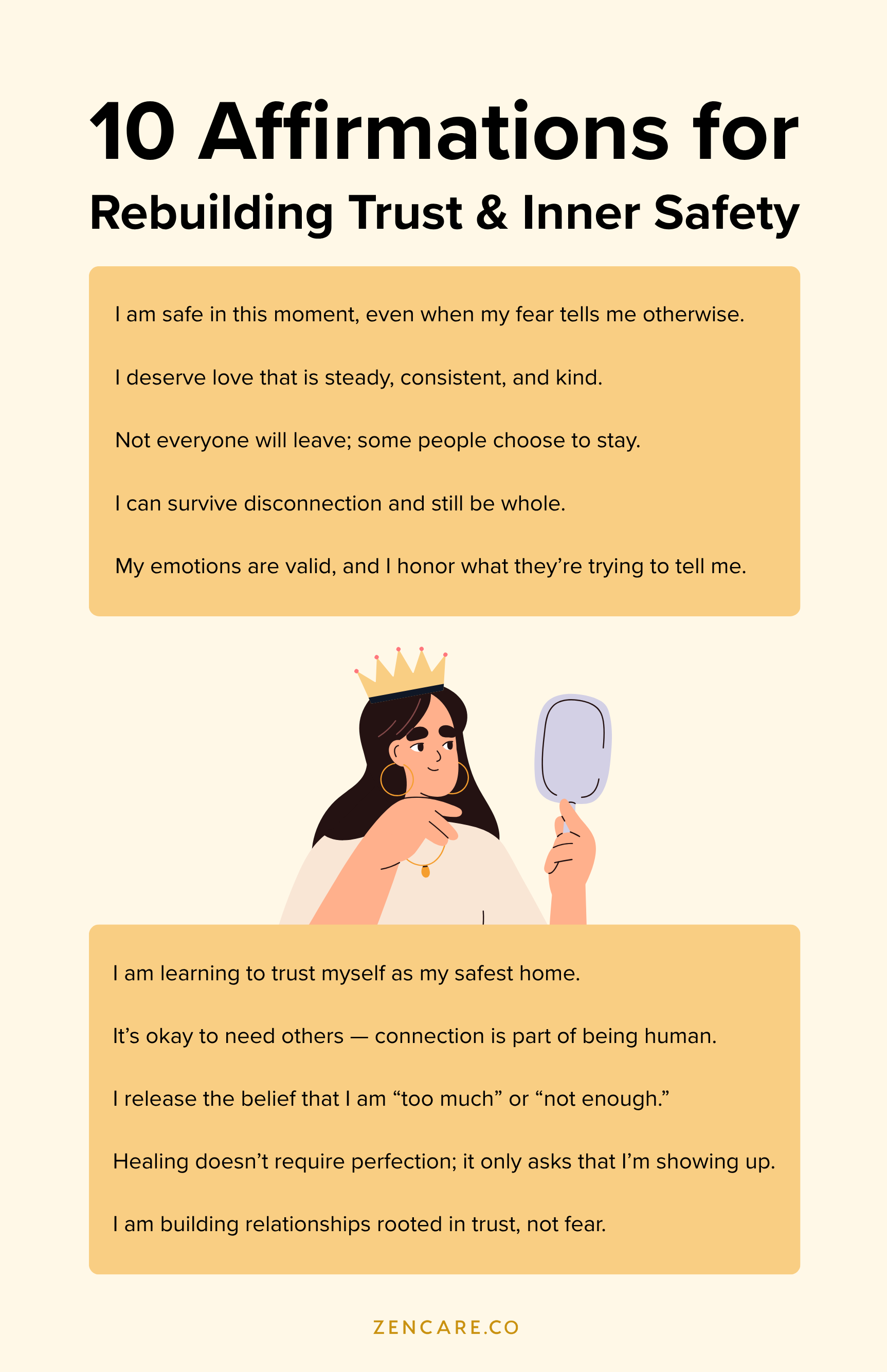
Affirmations
- Speak to yourself like a friend. “I am worthy of love. I am safe even when I feel scared.”
Boundaries
- Practice saying no, taking space, and recognizing when you’re over-giving.
Takeaway: You can start creating emotional safety today. These tools don’t replace therapy, but they help build a more stable foundation.
Healing Isn’t About “Needing Less”; It’s About Trusting More
A lot of people think healing abandonment issues means becoming totally independent or learning to stop caring. That isn’t true.
Healing means you still care, but now you know how to care for yourself too. You trust your ability to cope if someone leaves. You trust that not everyone will.
You learn to need safely, instead of desperately. You depend on people who’ve earned your trust, and you stay connected to yourself no matter what.
Takeaway: Healing doesn't mean numbing out your needs. It means knowing your needs are valid and learning how to meet them, with or without someone else.
Conclusion: Healing Is Possible and Worth It
Abandonment issues can feel like a shadow following you through every relationship. But that shadow doesn’t have to stay.
You’re not broken. You’re not too much. You’re someone who was hurt and is now learning to heal.
Each time you pause instead of panic, speak kindly to yourself, or trust a little more, you’re creating safety inside. That’s what healing looks like. It’s real, and it’s possible.
FAQ: Quick Answers to Common Abandonment Questions
What causes abandonment issues in adults?
They often come from unresolved childhood trauma, such as neglect or a parent leaving, or from repeated rejection or betrayal in adult relationships.
Can you heal abandonment issues on your own?
Self-help can make a big difference. But deep, long-standing patterns often shift more fully with therapy.
Do abandonment issues ever go away?
Yes, they may not disappear overnight, but with consistent work and supportive relationships, they can become far less intense and no longer control your life.