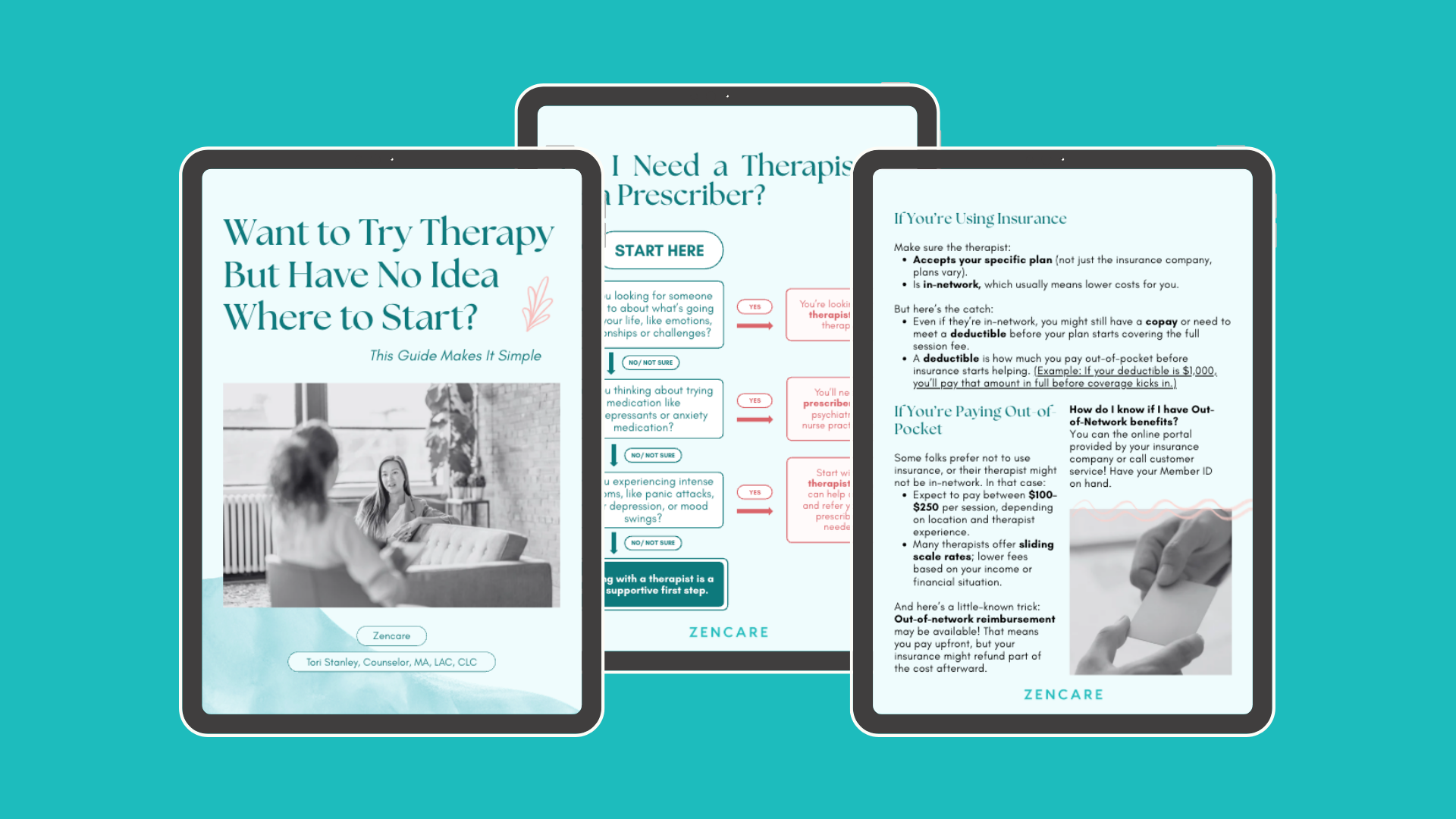
Want to try therapy but have no idea where to start? This guide makes it simple.
About the authors
Zencare
Zencare is where therapy meets trust, privacy, and accessibility. For over 10 years, we've been helping people find the right therapist, and today, more than 350,000 people have connected with a mental health provider through our platform. We've reached 5+ million therapy seekers, offering a simple, secure way to get started with mental healthcare.
At Zencare, your privacy is our priority. We don’t collect your data, charge hidden fees, or require subscriptions. Our platform is 100% free to use, no gimmicks, no gatekeeping. You browse therapists, reach out directly, and start your healing journey on your own terms. We believe everyone deserves access to quality care, and we're here to make that happen.
Tori Stanley, Counselor, MA, LAC, CLC
Tori Stanley is a licensed mental health therapist with a focus on eating disorder treatment and body image healing. She’s also a content creator with an Instagram community of over 340,000 followers, where she shares relatable mental health insights and where therapy truths meet humor, healing, and humanity.
Tori firmly believes that everyone can benefit from therapy, not because something is “wrong,” but because therapy offers something rare: a space to talk about what you want to talk about, without the pressure to perform, give back, or carry someone else’s emotions. It’s one of the only places where someone is fully focused on you.
How do you know if you actually need therapy?
This is a question we hear a lot, especially once someone starts the process of trying to find a therapist. And honestly, it makes sense. Searching for a therapist can be frustrating and overwhelming, and when people hit roadblocks, it’s easy for doubt to creep in. I often hear comments like:
- "Do I really need therapy?"
- "Is my problem big enough for therapy?"
- "Will a therapist think my problem is too small or that I’m just being dramatic?"
When finding a therapist feels hard, it can be tempting to downplay your struggles. I see this as a common "stuck point," a moment where someone talks themselves out of getting help by convincing themselves, "Maybe it’s not that bad. I’ll just keep living life and not do therapy."
But this kind of stuck point can keep you from the support you actually need.
Here’s the truth: If you’re even thinking about therapy, that’s usually a sign it could help.