Clinically reviewed and contributed to by Amber Simpson, CBT-I Therapist, MBA-HCAD, MSW, LCSW-S. Published on October 9, 2025.
Lying in Bed, Tired But Wired: Why Can't You Sleep?
You’re wiped out. Your body’s ready for sleep, but your brain? Wide awake and buzzing. Maybe you’re replaying the day, worrying about tomorrow, or just caught in that frustrating loop of I have to sleep, why can’t I sleep?
If this sounds familiar, you might be dealing with sleep anxiety, that nagging worry about not falling asleep that, ironically, keeps you up even longer. It’s a common issue, and it can make bedtime feel more like a battleground than a place of rest.
The good news? There are tools that can help, starting tonight. In this guide, you’ll learn how to quiet your mind, reset your body, and build sleep habits that actually stick. You’ll also get answers to questions like:
- Why can’t I sleep when I’m anxious?
- What helps with sleep anxiety right now?
- How can I make sleep easier over time?
Let’s start with what’s going on inside your brain and how to shift it.
What Is Sleep Anxiety, and Why Does It Keep You Up?
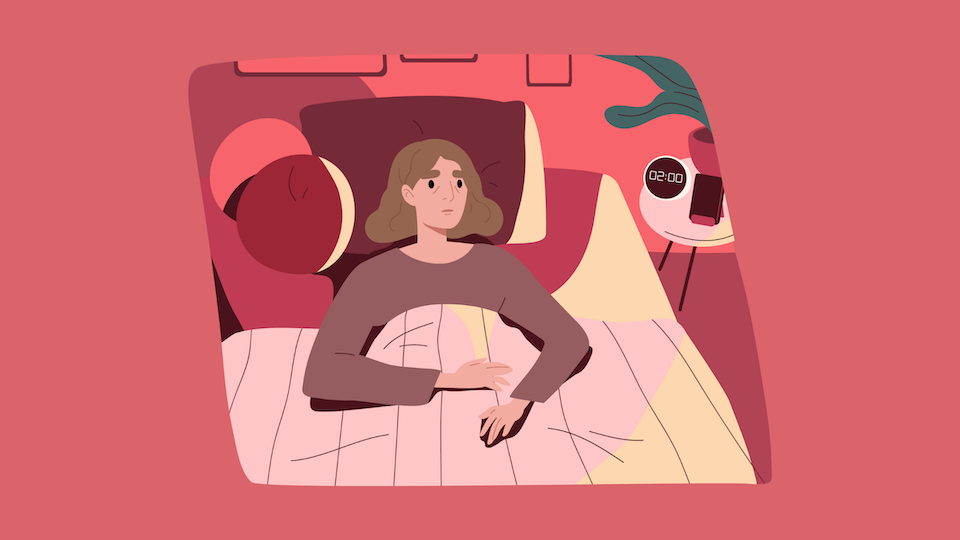
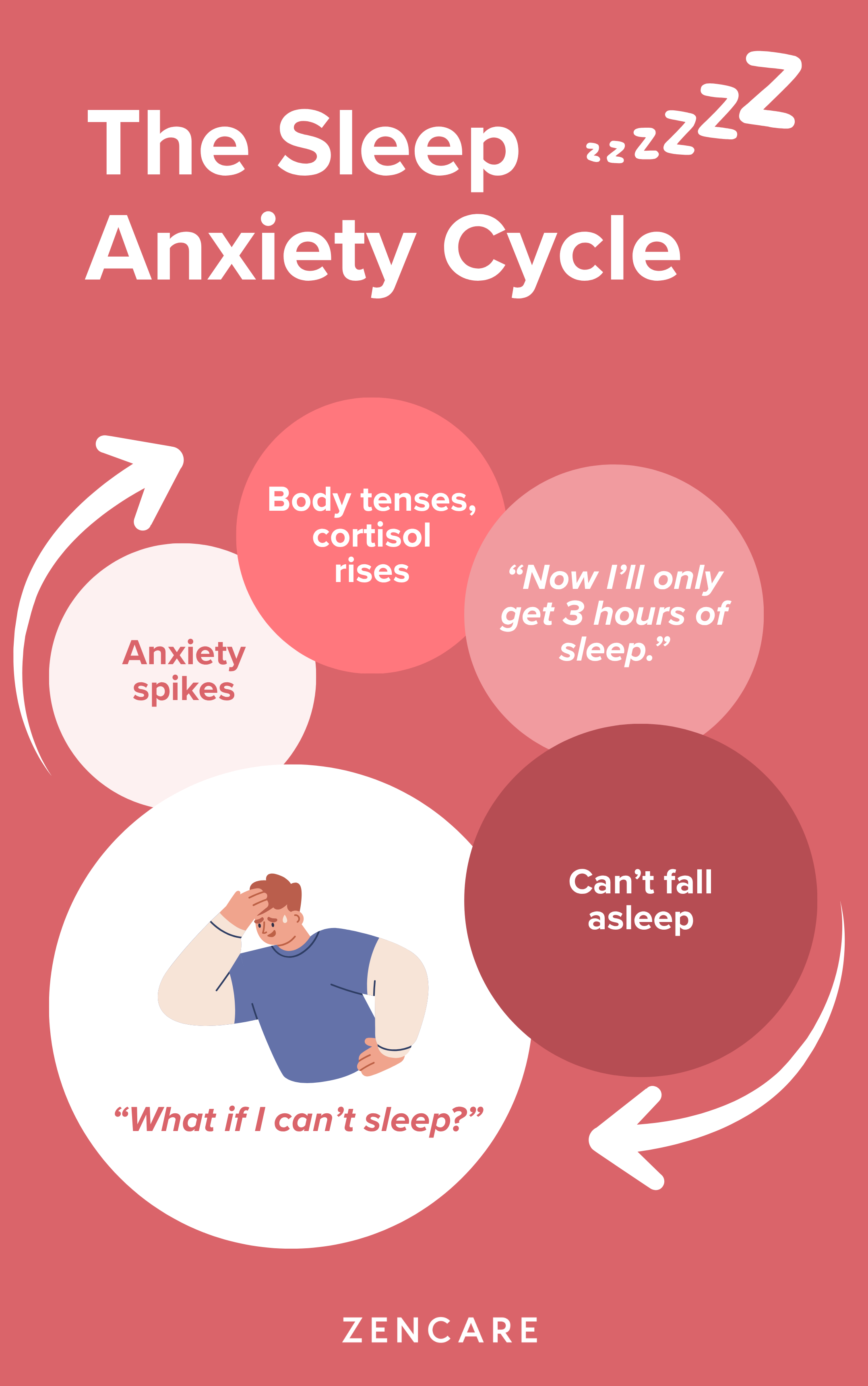
Sleep anxiety often begins with a single thought: What if I can’t fall asleep? That small worry snowballs into racing thoughts and rising stress. Your heart speeds up. Your muscles stay tense. And instead of winding down, your body feels like it’s gearing up for something.
What’s happening is your body’s stress response kicking in. More cortisol, faster breathing, a hyper-alert mind. It’s the exact opposite of what you need to drift off.
You might notice:
- Feeling tense or dreading bedtime
- Lying in bed with your mind racing
- Being physically tired but mentally wired
- Fixating on how many hours you’ll get (or not get)
This cycle is what keeps so many people trapped in the sleep anxiety loop. The more you fear not sleeping, the harder it becomes to actually rest.
Takeaway: Sleep anxiety thrives on fear and pressure. Understanding the pattern is the first step toward breaking it.
Start Here: Fast-Acting Tools to Calm Your Mind Tonight
If you’re lying in bed right now, feeling restless and frustrated, there are a few tools you can try tonight to settle your mind and body. Think of these as a pause button for your anxiety.
CBT-I therapist Amber Simpson says, "It's important to create a routine before bed and be consistent with it vs jumping around. Create a bedtime routine about 30-60 minutes before bed that is calming the mind and body, inviting sleep.”
Quick calming tools to use before bed:
- 4-7-8 Breathing: Inhale for 4 seconds, hold for 7, exhale slowly for 8. Repeat for a few minutes. It’s one of the fastest ways to slow your heart rate.
- Progressive Muscle Relaxation: Starting at your toes, tense one muscle group at a time, hold, then release. Move up the body slowly.
- 5-4-3-2-1 Grounding: Name 5 things you can see, 4 you can touch, 3 you hear, 2 you smell, 1 you taste. This brings your attention back to the present.
- Guided Body Scan or Meditation: Use a calming app or YouTube video to help walk you through relaxing each part of your body.
- Box Breathing: Inhale for 4 seconds, hold for 4, exhale for 4, hold for 4. Repeat for several rounds to help regulate your nervous system.
- Diaphragmatic Breathing: Breathe deeply into your belly instead of your chest. Place a hand on your abdomen and feel it rise and fall. This type of breathing signals safety to the brain and calms your body quickly.
- Yoga Nidra: Also called “yogic sleep,” this guided meditation leads you into deep relaxation without needing to move. It’s especially helpful if your body feels too wired for traditional sleep.
- Calming Music or Sleep Sounds: Soft, slow instrumental music or ambient sleep tracks can help shift your brain into a more restful state. Look for playlists labeled “deep sleep,” “theta waves,” or “relaxing piano.”
These aren’t just feel-good tricks. They work because they tell your nervous system, “You’re safe. It’s okay to relax.”
Takeaway: Use your body to calm your mind. Breathing, grounding, and guided relaxation can help you ease into rest tonight.
Your Pre-Sleep Routine: Create a Calm-Down Ritual That Sticks
One of the most powerful ways to reduce nighttime anxiety is to give your brain some predictability. When your body follows a familiar routine each night, it sends a clear message: it's time to wind down.
This doesn’t have to be elaborate or time-consuming. A 15-minute wind-down ritual can work wonders. The key is doing it consistently.
Build a wind-down routine that tells your brain it’s safe:
- Dim the lights about an hour before bed to help your brain start producing melatonin.
- Turn off screens (yes, even the comforting scroll) and do something offline like reading or journaling.
- Take a warm shower or do some gentle stretching to release tension.
- Externalize your thoughts: Jot down tomorrow’s to-do list or write out worries so they’re not spinning in your head.
When done consistently, even a short ritual helps lower pre-sleep anxiety and makes sleep feel more natural instead of forced.
Takeaway: Consistency beats complexity. A short, reliable wind-down routine can shift your nervous system into sleep mode.
Rethinking Your Bedroom: Make It Anxiety-Friendly
Your bedroom should be a retreat, not a stress zone. But often, subtle things in your sleep space can unknowingly trigger anxiety.
Let’s fix that.
Make your room more sleep- and anxiety-friendly:
- Keep it cool. Whatever temperature you keep your home at during the day as — drop it a few degrees at night.
- Block out light with blackout curtains or a soft eye mask.
- Remove visible clocks. Watching the time tick by just adds pressure.
- Try calming sensory tools like a lavender pillow spray, a white noise machine, or a weighted blanket.
Also, only use your bed for sleep and intimacy. If you scroll, eat, or work in bed, your brain starts associating it with activity instead of rest.
Takeaway: Your environment matters. Small tweaks to your space can reduce triggers and help you feel more grounded at bedtime.
Train Your Brain: Cognitive Tools That Quiet Anxious Thoughts
Anxiety doesn’t just live in your body. It feeds on thought spirals. At night, when everything is quiet, those thoughts can get loud.
Amber Simpson explains that CBT-I gets to the root of sleep anxiety. It helps retrain the mind and body for sleep. Think about this in three different areas:
- Cognitive: The therapist learns what type of thoughts and thought patterns a client has and then how to challenge and reframe though negative thoughts.
- Behaviors: Clients learn sleep hygiene skills, develop a sleep routine, calculate sleep efficiency, learn body triggers like the difference between sleepiness and fatigue, and how all these hygiene skills are important and matter.
- Relaxation: Clients learn to calm the mind and body through breathing techniques, mindfulness, progressive muscle relaxation and guided imagery.
These skills are not only great for learning with sleep anxiety but also life skills of stress and anxiety.
Try these cognitive strategies:
- Challenge the “what ifs”: Instead of “What if I don’t sleep and ruin my day tomorrow?” try “What do I know is true right now?” For example, “I’ve made it through tired days before.”
- Use a worry journal: Write your anxious thoughts down. Tell yourself, “I’ll look at this tomorrow if I need to.” Often, you won’t.
- Schedule your worries: Set a specific time during the day to think about problems. This teaches your brain that bedtime is not for overthinking.
- Accept imperfection: Not every night will be perfect, and that’s okay. One bad night doesn’t define your week.
These tools are drawn from CBT-I, Cognitive Behavioral Therapy - Insomnia, a highly effective approach to sleep anxiety treatment. You’re not ignoring your thoughts. You’re just not letting them take the wheel at bedtime.
Takeaway: Anxious thoughts at night are normal. Cognitive tools can help you acknowledge them without letting them control your sleep.
Lifestyle Tweaks That Lower Anxiety All Day (and Night)
Sleep anxiety doesn’t usually start when you get into bed. It often builds up throughout the day, especially if you’re running on stress, caffeine, or too much screen time.
Here’s how to support better sleep before you even hit the pillow.
Habits that lower your baseline anxiety:
- Limit caffeine and alcohol, especially after 2 p.m. They both interfere with sleep cycles.
- Move your body. Even 20 to 30 minutes of walking, stretching, or light yoga can help burn off anxious energy. But don’t do this too close to bedtime.
- Eat regularly. Blood sugar dips can feel a lot like anxiety.
- Get sunlight early in the day to regulate your circadian rhythm.
- Set phone and social media boundaries to protect your nervous system from constant stimulation.
These changes aren’t just about sleep. They help your body feel more regulated overall, which makes it easier to unwind at night.
What about when I travel?
When your day becomes night, and your night becomes your day — it can be hard to maintain your tried and true sleep routines to get the rest you need. But whatever you do at home, you need to be able to implement it when you travel or during holidays, or weekends.
CBT-I therapist Amber Simpson says, “We might not be able to implement our entire sleep routine while we travel, but we can adhere to the same wake up times, doing some of the routine, etc. You can implement modifications but still try to adhere to what you can. Tools like JetLag Rooster can help get you ready for an upcoming international trip where time zones are very different. Staying hydrated, walking, and eating well when you travel is also important. You still use these same tools when traveling.”
Here are some tips to prepare for travel:
- Pack earplugs and eye masks — You never know if your accommodations will be too noisy or too bright.
- Download content — If you have favorite calming sounds or guided meditations, download them in advance so you can always access them without wifi.
- Skip the nightcap — Indulging in that last glass of wine might disrupt your quality of sleep.
- Check for AC — If a cool room is the key to a good snooze, double check your accommodations will have air conditioning.
Takeaway: Sleep-supporting habits don’t end at bedtime. What you eat, drink, watch, and do during the day can shape how easily you rest at night. And whether you’re at home or on the road, having a few go-to tools in place helps you stay grounded and sleep-ready — no matter where you are.
Should You Consider Medication for Sleep Anxiety?
You might be thinking to yourself, “Sleep is so hard for me, I feel like I just need sleeping pills.”
Ultimately, CBT-I is the best treatment for insomnia — it’s been studied for years as the leading evidence-based treatment for this issue. However, if you are having sleep concerns, Amber Simpson does recommend seeing a physician to get into a sleep study to help rule out any underlying medical concerns.
Sleep medication can help you sleep, but it’s not a long-term solution. CBT-I is still the best treatment for insomnia, because it works to address the root of the issue. Amber Simpson shares that she works with sleep physicians frequently and medication is a temporary part of the solution while the client works through their CBT-I program.
Track What Works: Use Tools to See Your Progress
Not sure what’s helping and what’s not? Tracking your sleep and stress patterns can give you clarity.
This doesn’t mean obsessing over every night. Checking in weekly can help you spot what’s actually working and what needs adjusting.
What to track:
- Sleep quality. Use a sleep tracker app or journal to log how long and how well you sleep.
- Evening habits. Note your routine before good versus rough nights.
- Anxiety levels. Rate how anxious you felt before bed and what tools you used.
- Triggers. Keep a list of things (like scrolling or a late dinner) that tend to disrupt your sleep.
Apps like CBTI-Coach can help — it’s free, developed by the VA and you can also share the data and insights with your providers. The point isn’t to chase perfection. It's to build self-awareness.
Takeaway: Use tracking to learn, not judge. Noticing your patterns gives you power to adjust them.
Sleep Isn’t a Battle — It’s a Skill You Can Build
Here’s something no one tells you. You don’t need to sleep perfectly to feel better.
You don’t have to silence every anxious thought or force yourself to relax. You just need tools, and practice using them.
Start small. Pick one calming tool to try tonight. Breathe. Stretch. Write your thoughts down. Then tomorrow, do it again.
Sleep, especially when anxiety is involved, is a skill. It gets easier with consistency, not pressure.
You’re not broken. You’re just learning, and your brain is listening.
How to Find a CBT-I Therapist
If you're looking for personalized support, working with a therapist trained in Cognitive Behavioral Therapy for Insomnia (CBT-I) can be a game-changer. CBT-I is the gold standard treatment for chronic sleep anxiety and insomnia, helping you break the cycle of racing thoughts and restless nights.
You can start your search on Zencare, a trusted platform for finding vetted therapists.
- Use the “Approach” filter to select CBT-I (Cognitive Behavioral Therapy for Insomnia).
- Under the “Specialty” filter, choose “Insomnia & sleep issues.”
This helps you find therapists who specifically focus on sleep-related concerns using evidence-based methods.
Another great resource is the CBT-I Directory, which lists certified CBT-I providers across the U.S. and internationally. You can search by location and filter by provider type to find someone who fits your needs.
Whether you’re dealing with sleep anxiety, chronic insomnia, or disrupted sleep patterns, a CBT-I provider can help you retrain your brain and body for rest — with support every step of the way.
Takeaway: You don’t have to eliminate anxiety to sleep better. You just need the right tools, used consistently and gently.
Sleep Anxiety FAQs Answered by Amber Simpson, CBT-I Therapist
What helps with sleep anxiety?
Meeting with a sleep therapist to review your entire sleep story and get to the bottom of your sleep anxiety helps with sleep anxiety. Tools like breath work, mindfulness, cognitive restructuring will be a part of your toolbox learned in CBT-I, but it's important to know how to connect the tools specifically to your story.
Why do I feel anxious before bed?
You might feel anxious before bed because of bad behaviors that reinforce negative thoughts about sleep. Sleep anxiety is a vicious cycle. When you experience a trigger like stress or pain — it causes a few nights of bad sleep. Then you begin to have negative thoughts like: “My sleep is going to keep getting worse and ruin my day.” At this point, you become hyper-focused on the problem creating the sleep anxiety, which can lead to unhelpful behaviors of trying harder or taking naps. The bad behaviors reinforces the poor sleep, which reinforces the negative thoughts — the cycle continues.
Can anxiety cause insomnia every night?
Yes, sleep anxiety can play a big role in causing difficulty to fall or stay asleep. The negative thoughts (anxiety) play a role in the relationship we have with sleep. Impacting the quality we may, or may not get. Our brains are linking stress/anxiety with our bed. CBT-I helps you re-wire that brain and bed connection
How long does it take to get over sleep anxiety?
The time it takes to get over sleep anxiety varies by person. Most CBT-I programs are about 6 weeks long; give a session or two more if needed. Folks typically start seeing progress and shifts in their sleep within the first 2-3 weeks. I tell my clients to remember 2 words: grace and consistency. That helps the process a lot.
Do sleep trackers help with anxiety?
Sleep trackers can help, but it really varies person to person. If you find yourself relying only on those numbers, reviewing them daily, and using that to judge how you are feeling on our quality of sleep, then turn the device off. Devices are not completely accurate and they are a guide. Take the numbers with a grain of salt. Use them to see patterns, not solely on the numbers. Tools, like CBT-I Coach, will help you see trends, and you can share that data with your therapist and/or physician.