Clinically reviewed and contributed to by Roselyn Pérez Casiano, LCSW. Published March 20, 2026.
How can custody loss reshape everything?
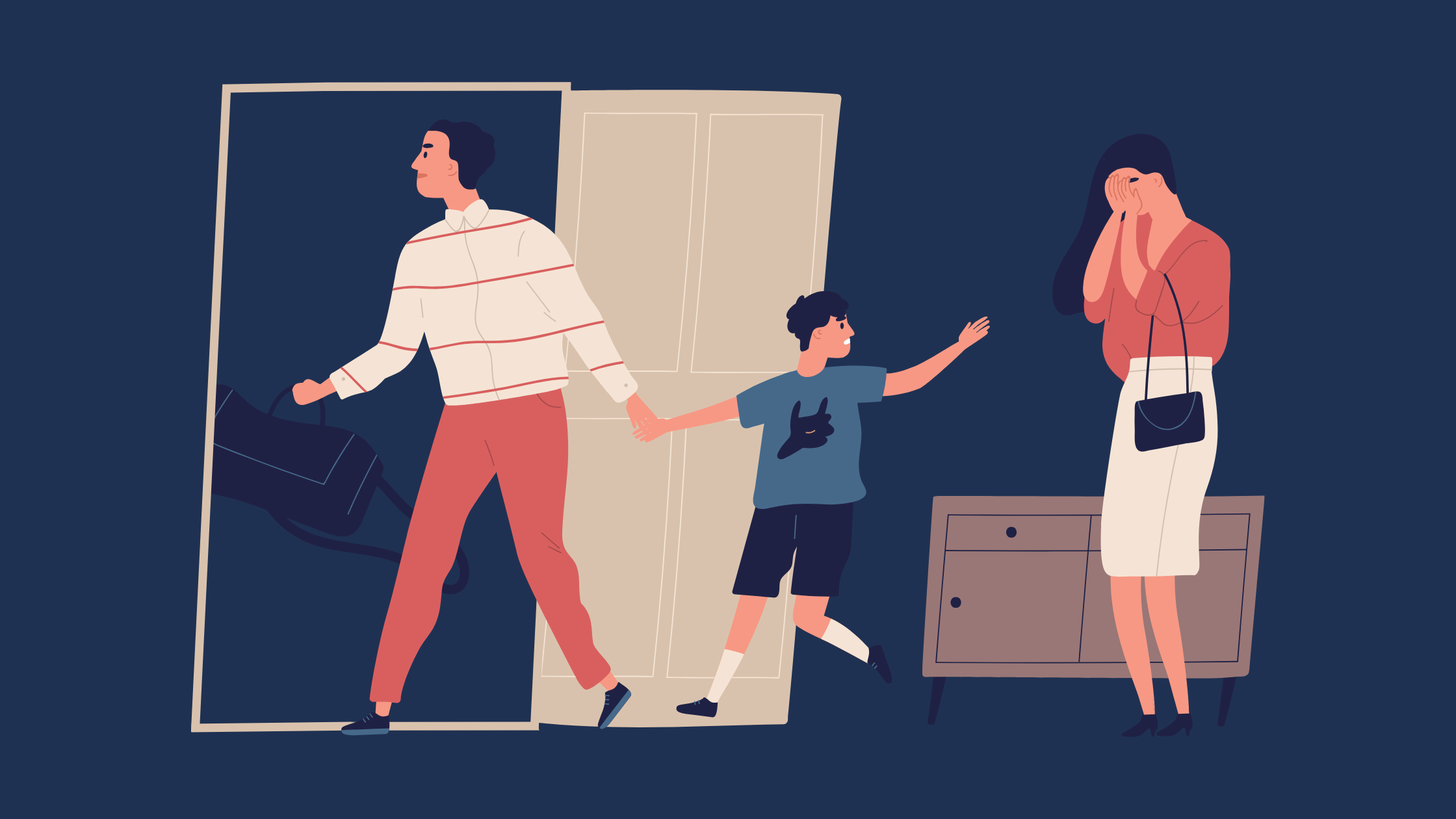
If you have lost custody, it can feel like your whole life changed at once. Many parents describe it as grief, trauma, and an identity rupture rolled into one. You might love your child fiercely, regret choices, feel angry at systems or other adults, and still want to rebuild.
Roselyn Pérez Casiano, LCSW shares, “When situations outside of our control happen, especially ones with a big impact, they often trigger multiple, conflicting emotions all at once. In the first days or weeks after losing custody, feelings of shock, denial, or even numbness are very common. It’s important to take things moment by moment, by the hour or even by the minute. It’s important to know that adaptation takes time. For many people, it can take around six months to start feeling more steady after a major loss. The first hours, days, and weeks are typically the most difficult, but they do pass, and healing is possible.”
This article offers support and practical next steps without judgment. Custody outcomes vary, but healing and stability still matter, for you and for the relationship you are working to protect over time.
What does grief look like after a custody loss?
Grief after custody loss is not only emotional, it can be physical. The trauma of a mother losing custody of a child, or any parent losing custody, can activate negative thoughts and actions. Mixed emotions are common. None of these feelings makes you a “bad mother” or a “bad parent.” Feelings are signals, not verdicts.
“Grief often shows up physically because our emotions are experienced in the body, not just in the mind. Memories and emotional connections, especially with a child, can trigger physical reactions when faced with separation or loss,” explains Roselyn Pérez Casiano, LCSW. “All of these reactions are normal. Your body is processing the emotional impact of the loss, and it’s natural for grief to feel both emotional and physical.”
Anchors that can help:
- “I can survive this hour” routine: shower, short walk, simple meal, journaling.
- Steady support point: a friend, a group, a therapist.
Why can grief feel like waves, not a straight line?
You may have heard of “stages of grief,” but real grief tends to move in waves. After you have lost custody, it is common to feel thrown off around court dates, missed holidays, school events you cannot attend, or changes in contact.
Common waves include:
- Shock or denial: numbness, disbelief, going through motions
- Anger: at yourself, an ex or partner, courts, family, professionals
- Bargaining: “If I fix everything fast, I’ll undo this”
- Depression: hopelessness, withdrawal
- Acceptance: the ability to take the next right step
Roselyn Pérez Casiano, LCSW shares that what may also be helpful to know is that in addition to the five stages of grief, there are six needs of grief or mourning, developed by Dr. Alan Wolfelt. Here’s what the six needs of grief might look like for someone navigating custody loss:
- Acknowledge the reality of the loss: Accepting that the current custody situation has changed and that life is different right now.
- Allow the pain of the loss: Giving space for emotions like sadness, anger, guilt, or shame without suppressing them.
- Honor and remember the relationship: Recognizing that the parent-child bond still exists, even if daily contact has changed.
- Develop a new identity: Adjusting to life with a different parental role while maintaining a sense of self-worth.
- Search for meaning: Reflecting on what can be learned, what healing or growth is possible, and what the future relationship could look like.
- Receive support from others: Seeking emotional, therapeutic, or community support during the adjustment.
If you cycle back after a steady stretch, it does not mean you are failing.

How can you rebuild identity beyond “parent” while still honoring parenthood?
Custody status is a legal reality, not a measurement of love, worth, or capacity for change. You can still honor yourself as a parent while building a life that supports repair.
A helpful distinction is guilt versus shame:
- Guilt: “I did something harmful, and I want to repair it.”
- Shame: “I am harmful, and I don’t deserve repair.”
Try:
- “What values do I want my child to associate with me over time?”
- “What kind of person am I becoming in response to this?”
Then support that identity with structure: education or job training, volunteering, parenting classes if required, and consistency.
What does self-forgiveness look like when you still feel responsible?
Self-forgiveness is not denial. It is choosing repair without self-destruction. When you are carrying the trauma of a mother losing custody of a child, self-hatred can feel like accountability, but it usually drains the energy needed to rebuild.
Responsibility often looks practical:
- Recovery support or sobriety steps
- Therapy, stable housing, anger management, co-parenting skills
- Consistent follow-through and documentation
Replace “I’m a failure” with “I made choices I regret, and I’m changing them.”
“Self-forgiveness and accountability work together: you own your actions and respond responsibly, while also treating yourself with kindness. This combination allows for real change and empowerment, because without self-forgiveness, it’s hard to see the growth that comes from taking responsibility.”
How can trauma affect your nervous system, and when should you get specialized support?
Trauma can keep the body stuck in survival mode: fight, flight, or freeze. You might feel on edge, shut down, or unable to sleep. When your system is overloaded, it is harder to show up calmly in contact moments, court-related stress, or difficult conversations.
Consider specialized support if you notice:
- Persistent panic, numbness, or feeling unreal or disconnected
- Intrusive memories that derail your day
- Inability to function at work or at home
- Substance relapse risk
- Thoughts of self-harm
Support options may include trauma-focused therapy, EMDR, somatic therapies, or DBT skills. A steady starting point is often what helps your system begin to settle.
How can you connect with your child within court orders, and heal estrangement slowly?
Follow court orders exactly. This protects your progress and builds trust. After you have lost custody, consistency is one of the strongest signals you can offer.
Depending on what contact allows:
- Letters, recordings, or a consistent check-in ritual
- A memory book with photos, drawings, or short stories
- Attending supervised sessions grounded and calm
If your child feels guarded, go slowly. Do not demand closeness. Offer reliability. Show curiosity about their world without interrogating them about the other home. Focus on regulated presence over big emotional talks.
Simple repair language often lands best:
- “I love you.”
- “I’m working on being safe and steady.”
- “I’ll keep showing up in the ways I’m allowed to.”
When contact is limited and emotions are high, a parent’s most reliable control is over themselves, not the child or the court. Showing reliability means focusing on self-regulation and self-care.
This can include:
- Attending therapy or support groups
- Reaching out for help when needed
- Practicing coping strategies like mindfulness or exercise
By consistently finding tools that help you manage your own emotions before, during, and after interactions, you can demonstrate stability and reliability, even when circumstances feel out of their control.
Making this a regular practice helps them stay grounded and respond in a way that supports both themselves and their connection to their child.
What practical steps can help you rebuild stability?
When everything feels urgent, a plan can bring your brain back online. You do not need to rebuild your entire life in a week.
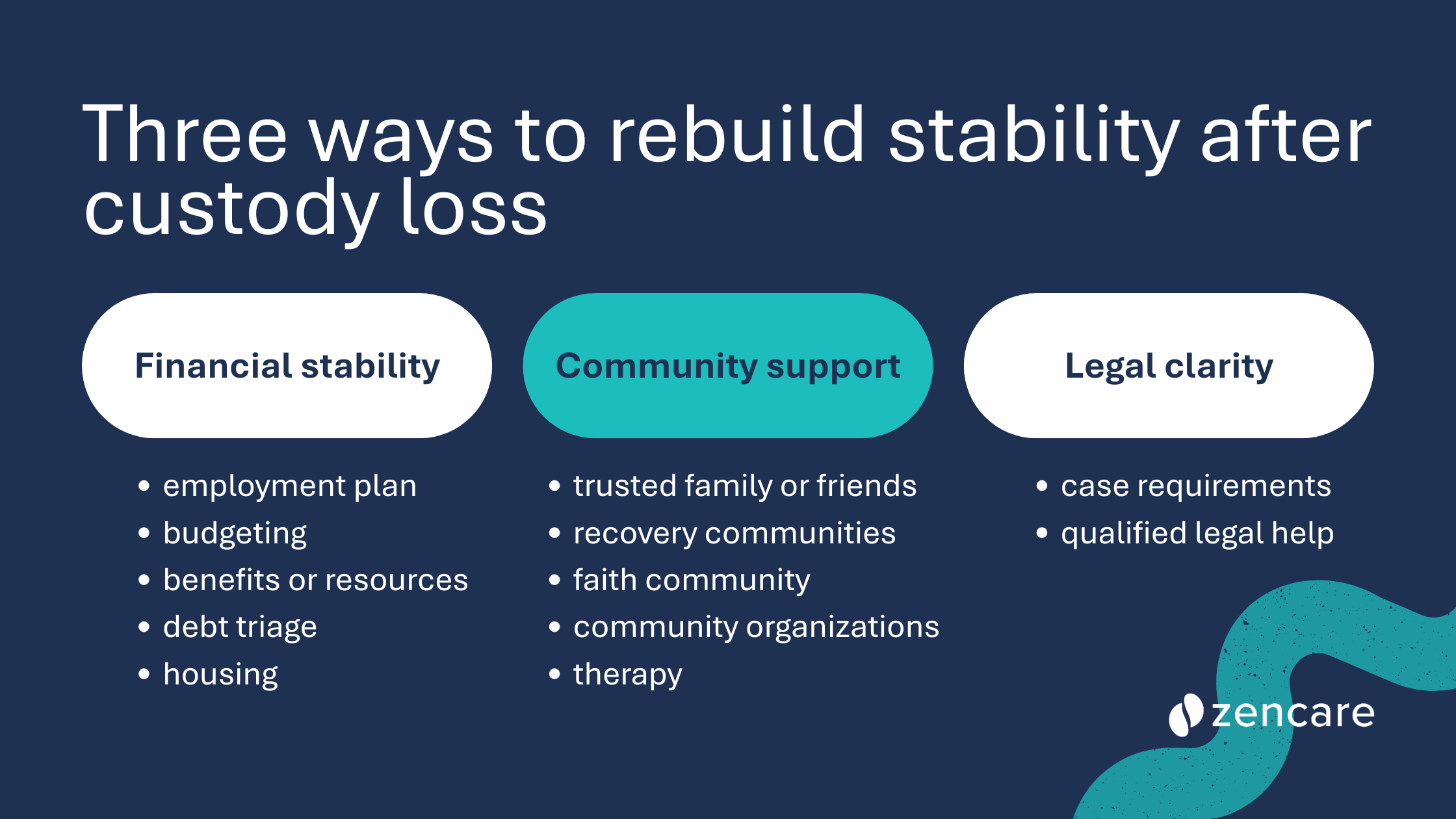
Focus on three areas:
- Financial stability: employment plan, budgeting, benefits or resources, debt triage, housing
- Legal clarity: case requirements, consult qualified legal help
- Community support: trusted family or friends, recovery communities, faith or community organizations, therapy
Choose 2 to 3 weekly goals, such as attending one support meeting, completing one requirement task, and getting three nights of sleep.
How can you keep hope while you rebuild?
It would be unfair to promise a specific custody outcome. Still, your healing matters. The life you build now, with stability, support, and consistent effort, is something your child can feel over time. If you have lost custody and you are carrying this alone, consider reaching out to a therapist or a support network. You deserve support that helps you take the next right step, and then the next one after that.
“When custody outcomes are uncertain, hope acts as the fuel for change. It helps parents focus on possibilities, solutions, and steps they can take, rather than slipping into helplessness, which only reinforces the challenges they’re facing,” explains Roselyn Pérez Casiano, LCSW. “This is a moment for reflection and intentional action: hope supports motivation, strengthens willpower, and empowers parents to take responsibility for what they can control in their situation.”
Find a therapist for custody loss on Zencare
If you're looking for support while navigating custody loss, find a therapist on Zencare.co who specializes in custody issues, divorce or family therapy.
When the challenges associated with custody issues become especially prolonged or intense, they can lead to symptoms of common mental health conditions such as anxiety or depression. During this stressful time, it can be helpful to seek therapy for additional support.