Published March 6, 2026.
Complex post-traumatic stress disorder (C-PTSD) causes a specific kind of pain in love, going from feeling safe one minute and terrified the next. C-PTSD and romantic relationships can often feel like walking in a minefield, but the mines were planted years ago.
C-PTSD develops from relational trauma, often from childhood, whereas an event triggers standard PTSD. When it comes to navigating C-PTSD in a relationship, it's about learning to navigate the nervous system together, not “fixing” the survivor.
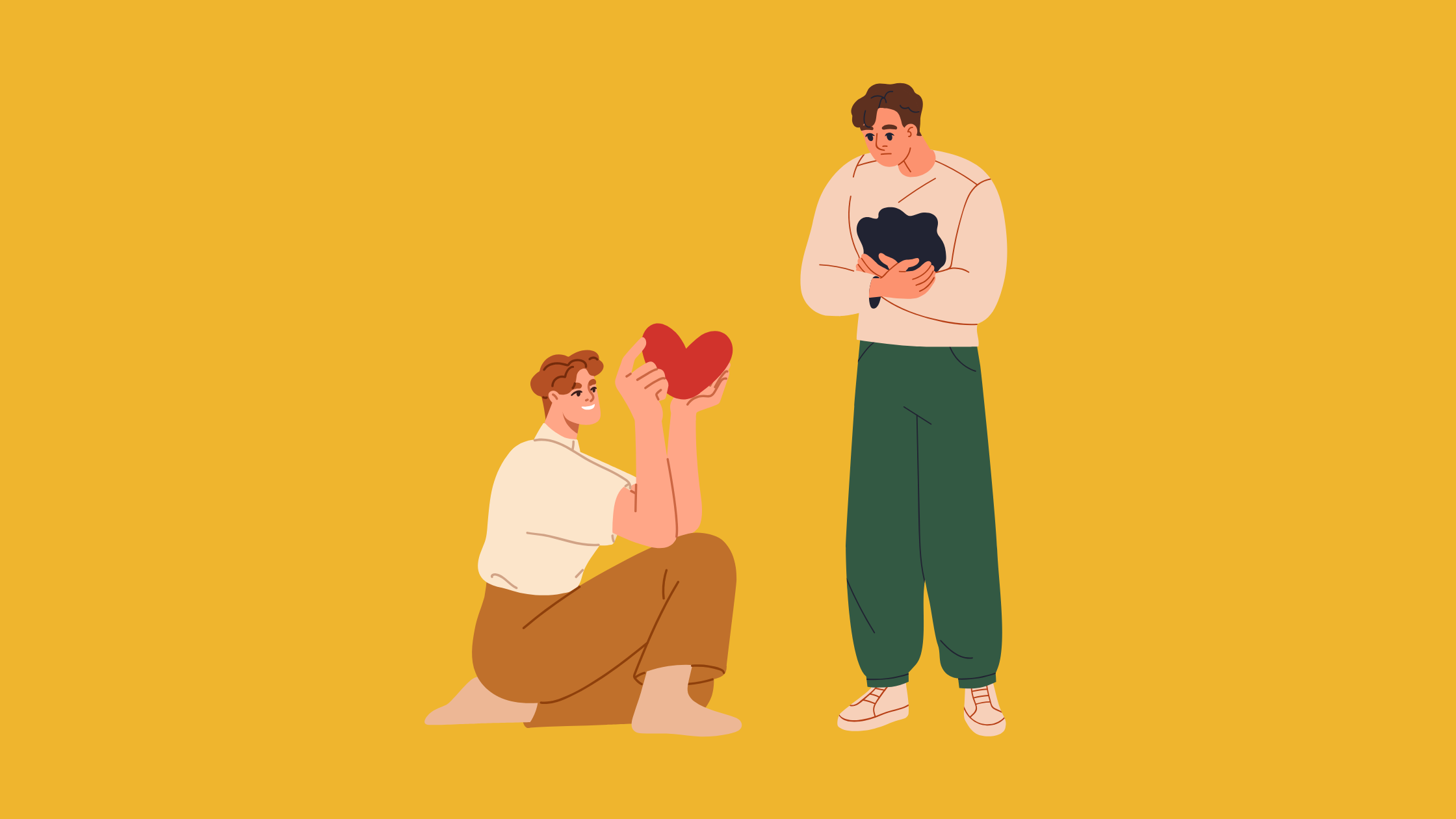
Understanding complex PTSD in a relationship
Survivors with C-PTSD might crave intimacy but panic when they receive it. This reaction is known as a biological freeze-or-flight response to vulnerability. It often portrays itself in a vicious cycle, where the survivor pulls away from fear, and the partner chases them, causing the survivor to feel engulfed and withdraw further. A survivor of C-PTSD may also be hyper-independent, as the refusal to ask for help is often a trauma response to believing that no one will be there for them.
A partner can mistake this behavior for coldness. However, if you are the partner in this situation, it's important to understand that it is not your fault — it's a reaction to a troubled relationship in their past. Your role can be significant in helping the survivor overcome the cycle and be open to vulnerable moments.
Tips for de-escalating triggers
Whether you are the survivor or partner in the relationship, here are a few tips to navigate complex PTSD triggers in relationships:
- Spot the relational flashback: Try to pinpoint the moment a partner's tone or glance sends the survivor back to the past. This reaction matches the past danger, not the present safety.
- Create a time-out script: As a C-PTSD survivor, it's important to create a concrete script or tool to let your partner understand that you are slipping into past trauma. Instead of storming out, try saying something like, “I am feeling flooded right now and can't hear you. I need 20 minutes to regulate, and then I will come back to you.”
- Hold space without fixing: For the partner, try to hold space for them without immediately trying to fix the issue. Sometimes, sitting quietly nearby them is safer than repeatedly asking, “What's wrong?”
3 pillars for building a trauma-informed partnership
Every relationship has its ups and downs, especially with one person trying to navigate previous trauma. If you feel complex PTSD is sabotaging your relationship, letting your partner know what you are feeling is crucial so they can best provide space or support when you need it. For partners, the survivor's distance or coldness toward you is not meant to be personal — be patient with them as they de-escalate triggers.
To best navigate this relationship together, consider these primary pillars:
- Radical transparency: Trust is rebuilt through predictability. Keeping small promises, such as calling when you say you will, will matter more than grand gestures.
- Side-by-side communication: Suggest with your partner to have tough talks while walking or driving. Reduced eye contact can lower the threat perception for the C-PTSD nervous system.
- The third leg of the stool: As the partner of a C-PTSD survivor, it is not your role to be a therapist. A healthy relationship can require a team approach where a professional carries the heavy clinical lifting.
Turn surviving into thriving with Zencare today
Healing is not linear — there will be good days and hard days, as with any relationship. Just know that you are not alone. With Zencare, you can find a therapist who specializes in attachment trauma and C-PTSD to help you and your partner navigate a trauma-informed relationship.
Search our directory to find a therapist who understands the nuance of your story.