Clinically reviewed and contributed to by Citlali Herrera, LCSW. Published April 16, 2026.
Moving to a new city can bring excitement, relief, hope, and stress at the same time — it’s a major life transition. If you are feeling anxious about moving, that does not mean anything is wrong with you or that the move was a mistake. Moving anxiety is a common response to leaving behind familiar routines, relationships, and places while trying to build a new life from scratch.
Even when a move is wanted, the adjustment can feel surprisingly hard. You are not just changing locations. You are rebuilding stability, comfort, and connection. That is why relocation anxiety can show up before the move, during the transition, or after you arrive.
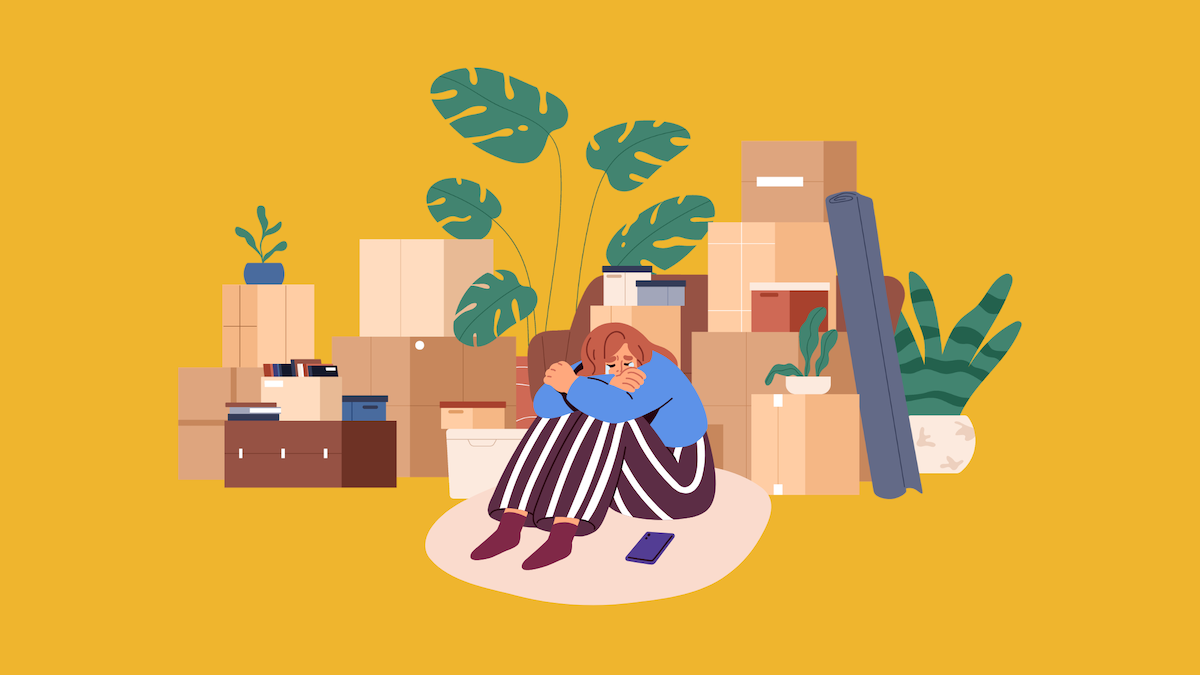
What is moving anxiety?
Moving anxiety is the stress, worry, and emotional strain that can come with relocating. It is often hidden because moving is supposed to look exciting from the outside. But starting over in a new place can bring uncertainty, loneliness, and pressure to “settle in” quickly.
Anxiety about moving may come from practical concerns like finances, work, or safety. It can also come from less obvious losses, like missing your usual routine, your support system, or the version of yourself that felt confident in your old environment.
“When you’re used to seeing the same buildings, going to the same coffee shop, or knowing exactly where things are in a grocery store, your body relaxes. That familiarity creates an internal sense of safety. When everything becomes new: new routes, new places, new routines, it can feel like you’re moving outside of what your system recognizes as safe. Anxiety isn’t random, it’s your subconscious interpreting unfamiliarity as a lack of safety,” explains Citlali Herrera, LCSW .
In many cases, this kind of stress is a normal part of adjustment. Still, that does not make it feel any less real.
Takeaway: Moving anxiety is a normal response to change, loss of familiarity, and the pressure of starting over.
What are the signs and symptoms of relocation anxiety?
Relocation anxiety can affect your emotions, your habits, and your body. Some signs are easy to spot. Others are quieter.
You might notice:
- Persistent worry or overthinking
- Sadness, loneliness, or homesickness
- Irritability or feeling emotionally overwhelmed
- Changes in sleep or appetite
- Fatigue, restlessness, or trouble concentrating
- Reluctance to unpack, decorate, or settle in
- Avoiding new places or social opportunities
- Staying overly focused on life back home
What you might not notice are other quieter symptoms, like grief.
Citlali Herrera, LCSW highlights, “Grief tends to stack. One loss can reflect all the others, like an infinity mirror. When you lose your sense of comfort in a new place, it can quietly bring up older grief that was never fully processed. That’s why you might suddenly feel pulled toward texting that ex, it’s not random, it’s layered.”
These symptoms can make it harder to engage with your new environment. Instead of slowly building comfort, you may feel stuck in a cycle of stress and avoidance.
Takeaway: If you feel emotionally off, physically drained, or resistant to settling in, moving-related anxiety may be part of the picture.

Why does it matter to recognize moving-related anxiety?
It matters because unrecognized anxiety about moving can shape your entire experience in a new city. When stress goes unnamed, it often turns into withdrawal. You may stop exploring, avoid making plans, or assume you will never feel at home.
That isolation can make it harder to build a new support system. The longer you stay disconnected, the more unfamiliar your surroundings continue to feel. Over time, moving anxiety can affect your confidence, relationships, and ability to enjoy the life you moved for.
That’s why being able to distinguish between moving-related anxiety and general anxiety from moving is important. “Awareness changes the trajectory. When you name it as moving-related anxiety instead of ‘this place sucks,’ you interrupt the pattern and give yourself another option,” says Citlali Herrera, LCSW .
Recognizing what is happening early makes it easier to respond with care instead of self-judgment.
Takeaway: Naming moving-related anxiety helps prevent avoidance, isolation, and the feeling of being permanently stuck.
How can you recognize it in yourself?
One of the most helpful steps is getting specific about what feels hard. Sometimes the issue is not the move itself, but what the move brought up for you.
Ask yourself:
- What part of this move feels hardest right now?
- What do I miss most about my old life?
- Am I grieving people, routines, or a sense of identity?
- What am I afraid will happen here?
- Am I expecting myself to adjust too quickly?
Journaling can also help you identify your personal stressors. Try prompts like:
- “What feels most uncertain in this new city?”
- “What would help me feel 10% more at home this week?”
- “What thoughts come up when I imagine staying here long-term?”
- “What support do I need that I have not asked for?”
Self-reflection can help you understand what might be driving your anxiety:
- What do I miss out on by holding onto the version of me from the previous location?
- What is my anxiety keeping me safe from feeling?
- Who would I be if I let myself love this place?
- What am I expecting this city to give me that I’m not giving myself?
- If nothing about this place changed, what would need to shift within me for this to feel okay?
The goal is not to overanalyze. It is to understand what is fueling your stress so you can respond more clearly.
Takeaway: Self-reflection can turn vague overwhelm into specific, manageable challenges.
How to cope with moving anxiety
If you are wondering how to cope with moving: practical, realistic support usually helps most.
Start with building a routine. Try to wake up, eat, and wind down at roughly the same times each day. A predictable rhythm can create a sense of stability when everything else feels unfamiliar.
Explore your new environment gradually. You don’t need to master the whole city at once. Walk one neighborhood. Find one café, park, or grocery store that starts to feel familiar. Repetition helps reduce relocation anxiety.
Stay connected to people from home, but try not to use those connections as an escape from your present life. Comfort matters, but so does giving yourself the chance to engage where you are.
“It can be really helpful to bring your old world into your new one. Talk to loved ones about the places you’re exploring, or call someone while you’re walking through a new park. You’re not choosing one over the other, you’re letting both exist at the same time,” encourages Citlali Herrera, LCSW .
Look for manageable ways to meet people. Join a class, attend a local event, volunteer, or simply become a regular somewhere. If you are introverted or busy, focus on low-pressure contact rather than instant friendship.
And don’t overlook the basics. Sleep, food, movement, hydration, and time outside all support emotional regulation during a life transition. When you feel anxious about moving, caring for your body can make the adjustment feel more manageable.
On the hardest days, keep it simple:
- Name what you are feeling.
- Eat or drink something nourishing.
- Step outside for a few minutes.
- Reach out to one trusted person.
- Do one small thing that makes your space feel more like home.
Takeaway: Small actions create routine, familiarity, and connection.
When should you seek help for moving anxiety?
A certain amount of stress is expected during a move. But sometimes relocation anxiety lasts longer than expected or becomes too intense to manage alone.
You may want professional support if:
- Your anxiety lasts for weeks without improving
- Your sleep or appetite changes become severe
- You feel panic, dread, or hopelessness
- Daily functioning feels harder than usual
- You are struggling to cope on your own
Citlali Herrera, LCSW reminds us that, “Normal stress shifts. It has some movement to it. When it starts to feel repetitive: same thoughts, same emotions, same patterns on loop, it may be time for support. Especially if your world is getting smaller instead of expanding.”
It might also be helpful to name loneliness as a parallel experience, something that often sits underneath or alongside it, but doesn’t always get explicitly addressed.
Loneliness is often the quieter layer of moving-related anxiety. It’s not just about missing people, it’s the absence of being known in your day-to-day life. The small interactions, the familiar faces, the places where you don’t have to explain yourself yet. Without that, it’s easy to feel unanchored in ways people don’t expect, and anxiety can fill in that space
If you’re feeling lonely, or if you’re feeling that repetitive unending stress — it might be time to reach out for support. Reaching out does not mean your adjustment is failing. It means you are giving yourself support during a difficult transition.
Takeaway: If anxiety is persistent or interfering with daily life, professional help can make the adjustment feel more manageable.
How do you go from surviving to thriving?
Thriving in a new place usually happens slowly. It is not about forcing yourself to feel at home right away. It is about giving yourself permission to struggle while you build something new.
You can miss your old life and still create a good life here. Those two things can exist together.
Over time, thriving may look like feeling more confident in your routine, knowing your way around, finding a few favorite places, and building relationships that make the city feel less unfamiliar. The goal is not just to “settle in.” It is to create a life that feels lived in.
Takeaway: Moving is not just about surviving the transition. It is about slowly building belonging, connection, and trust in yourself.
FAQs about moving anxiety
Is it normal to feel anxious about moving to a new city?
Yes. Moving is a major life transition, so it is very common to feel stressed, lonely, or uncertain while adjusting.
How long does relocation anxiety last?
It varies. For many people, it eases as routines and relationships develop. If symptoms persist or worsen, extra support may help.
How do I cope with moving when I feel alone?
Focus on structure, regular contact with trusted people, and low-pressure ways to meet others in your new community.
When should I get help for anxiety about moving?
If your symptoms are intense, last for weeks, or interfere with daily life, professional support is worth considering.