Published on September 22, 2025 by Zencare Team.
Let’s start with the big question: What is resilience, really?
At its core, emotional resilience is your ability to ride life’s emotional waves without getting swept away. It’s how you stay grounded when things fall apart, how you adapt under pressure, and how you keep showing up even when you’re exhausted, uncertain, or overwhelmed.
And right now, resilience matters more than ever.
Between rising burnout, ongoing stress, and a world that just won’t slow down, we’re all under emotional pressure. But here's the empowering truth: resilience is not something you're born with. It's a skill. A set of tools you can learn, practice, and get better at over time.
In this guide, you’ll find:
- What emotional resilience actually looks like (spoiler: it’s not just “bouncing back”)
- Simple practices grounded in psychology and neuroscience
- Everyday habits that build emotional strength
- Quick tools to calm your body and mind in real time
- Tips for tracking your growth and tailoring your approach
You don’t need to be perfect. You just need to be willing to start.

What Is Emotional Resilience, and What It Isn’t?
So, what is resilience?
Resilience means being able to adapt when life throws you curveballs. It’s not about pretending everything’s fine. It’s about finding ways to move forward, even when it’s messy.
Emotional resilience, specifically, is how you handle emotional pain, stress, and uncertainty. It’s staying connected to yourself and others without falling apart or shutting down.
Let’s clear up a few myths
Resilience isn’t:
- Always being positive
- “Snapping back” right away
- Ignoring how you feel
It’s definitely not about pushing through at all costs.
Real resilience is feeling the full range of your emotions and still choosing to move through them, not around them.
What supports resilience?
You don’t build resilience in isolation. It’s shaped by:
- Your mindset
- The choices you make every day
- The people you surround yourself with
- The environments that either support or drain you
Think of emotional resilience like bamboo. It’s not rigid. It’s flexible. It bends in strong winds but doesn’t break.
Takeaway:
Resilience isn’t about toughness. It’s about emotional flexibility, healthy coping, and staying rooted when life feels chaotic.
What Are the Core Resilience Practices Backed by Science?
These aren’t vague ideas. They’re grounded in research and easy to weave into your daily routine.
1. Mindfulness: Be Here Now
Mindfulness helps you press pause. It’s the skill of noticing what’s happening in your mind and body without judging it.
When practiced regularly, mindfulness can lower stress, reduce reactivity, and help you see things more clearly.
Try this: Close your eyes. Inhale deeply. Exhale slowly. Just notice what’s here. Your breath, sounds, tension, emotion. No fixing. Just noticing.
2. Self-Compassion: Talk to Yourself Like a Friend
When you're going through something hard, how do you speak to yourself?
Self-compassion means offering yourself the same understanding you’d give a friend. It reduces self-blame, increases resilience, and helps you bounce forward rather than just back.
Shift this: “I’m such a mess.” → “This is hard, and I’m doing my best.”
3. Cognitive Reframing: Flip the Script
Reframing is a powerful mental reset. Instead of spiraling into worst-case scenarios, it helps you shift your inner dialogue.
Instead of “I can’t do this,” try: “This is challenging, but I’ve faced hard things before.”
Takeaway:
These resilience skills don’t take hours. They just take intention. Practice them daily and you’ll begin to respond instead of react.
Resilient Habits: How Your Behavior Builds Mental Strength
Resilience isn’t just in your head. It lives in your habits, the small choices you make again and again.
1. Values-Driven Action: Know Your “Why”
When your decisions align with what actually matters to you, you gain clarity and motivation.
Ask: “Is this choice in line with who I want to be?”
Even tiny acts of alignment, like saying no to something that drains you or yes to something that energizes you, reinforce emotional strength.
2. Graded Exposure: Face Challenges Step by Step
Avoidance shrinks your world. Graded exposure helps expand it, one small and manageable step at a time.
Scared of public speaking? Start by talking in a small meeting. Celebrate that win.
3. Routine & Structure: Anchor Your Day
Chaos outside? Bring order inside. Routine creates emotional stability, reduces decision fatigue, and signals safety to your nervous system.
Simple start: Go to bed and wake up at the same time for a week. See how your energy shifts.
Takeaway: If you're wondering how to be more resilient, start by acting with purpose, facing small fears, and creating structure that supports your nervous system.
The Power of Relationships: Support Without Burnout
You don’t have to do this alone. Resilience grows stronger in connection, especially when healthy boundaries are in place.
1. Healthy Social Connections: Don’t Isolate
A single supportive relationship can act like an emotional safety net. Talking it out, being heard, or just feeling seen can lower cortisol and improve your ability to cope.
Action step: Reach out to someone who makes you feel safe, not someone who drains you.
2. Boundaries: Protect Your Energy
Supporting others is beautiful, but it can lead to burnout if you don’t protect your own energy. Boundaries help you care without collapsing.
Say: “I care about you deeply, but I need to take care of myself right now.”
3. Belonging & Validation: You’re Not Alone
Feeling like you belong, whether at work, in a community, or in your identity, fuels emotional resilience. Shared experience reduces shame and isolation.
Join a group, a class, or a conversation where you don’t have to explain your whole self.
Takeaway: Strong relationships and clear boundaries help build resilience. Lean on others while staying grounded in your own needs.
Nervous System Hacks: Fast Tools to Shift Your State
You don’t need to wait for therapy or a long weekend retreat. These simple body-based tools can reset your stress response quickly.
1. Breathwork & Movement
Your breath is a built-in remote for your nervous system. Movement helps release stored tension.
Try this: Inhale for 4 seconds, exhale for 6. Do that for 2 minutes while walking slowly. Notice how your body shifts.
2. Sleep Hygiene
Sleep is your emotional reset button. Poor sleep makes small problems feel huge. Good sleep improves resilience, focus, and mood.
Tip: Dim lights after sunset. Avoid screens 30 minutes before bed. Try a weighted blanket if you like deep pressure.
3. Sensory Grounding or Cold Exposure
Need to snap out of a stress spiral? Activate your senses.
Splash cold water on your face. Hold an ice cube. Touch something textured. Let your body lead the way out of your head.
Takeaway: Resilience lives in your body too. Use quick, science-backed tools to calm your system and return to balance.
Tracking Your Growth: How to Know You’re Becoming More Resilient
How do you know if it’s working?
The signs are subtle but powerful. You start pausing before reacting. You feel more aware and in control. You bounce forward, not just back.
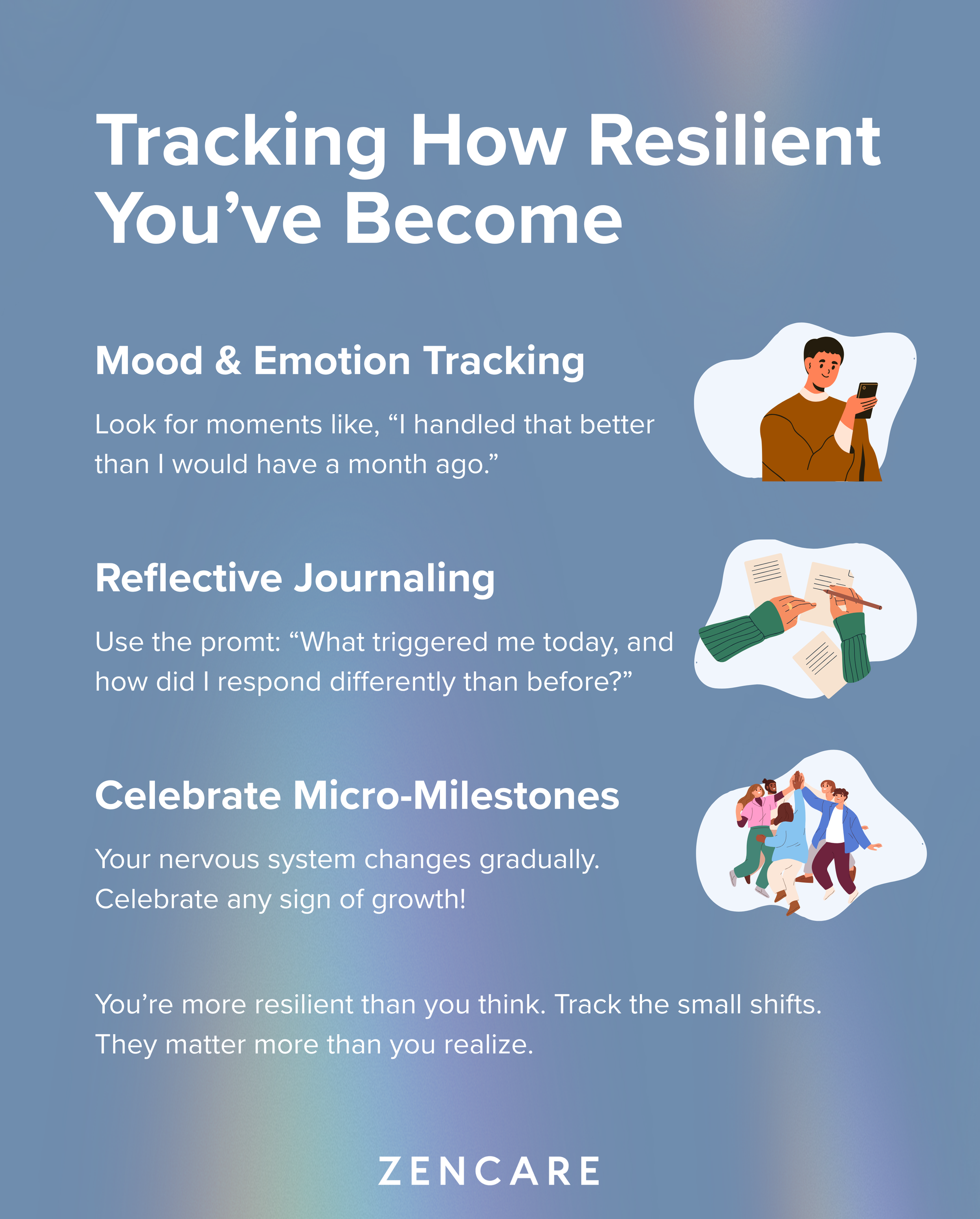
1. Mood & Emotion Tracking
Use an app or a notebook to jot down how you’re feeling each day. Over time, you’ll start noticing patterns and progress.
Look for moments like, “I handled that better than I would have a month ago.”
2. Reflective Journaling
Reflection deepens self-awareness. It helps you connect dots between your emotions and life events.
Prompt: “What triggered me today, and how did I respond differently than before?”
3. Celebrate Micro-Milestones
Your nervous system changes gradually. Celebrate any sign of growth.
Maybe you set a boundary. Maybe you took a breath before reacting. That’s resilience in motion.
Takeaway: You’re more resilient than you think. Track the small shifts. They matter more than you realize.
Tailoring Your Resilience Plan to Your Life
There’s no universal roadmap to emotional resilience. What works for one person may not work for another, and that’s okay.
1. Cultural Sensitivity & Identity
Your background, identity, and lived experience shape what healing looks like. Some tools might not resonate with you, and that’s not failure.
Ask: “What have I already learned about surviving and thriving from my culture or community?”
2. Chronic Stress or Trauma
If you’ve lived through trauma, go gently. Some resilience tools may need to be modified or avoided entirely. Safety comes first.
Choose tools that feel calming, not overwhelming. And give yourself full permission to rest.
3. Flexibility Over Perfection
Missed your morning routine? Didn’t journal this week? No big deal.
Resilience isn’t about sticking to a rigid plan. It’s about adapting and staying responsive to your current needs.
It’s not a streak. It’s a rhythm. Make room for change.
Takeaway: If you're learning how to be more resilient, remember this: personalize your approach, trust your pace, and let your version of resilience reflect your reality.
Building Emotional Resilience Is a Practice, Not a Destination
Here’s the truth. You’ll never be done building resilience.
But with every mindful breath, every boundary you hold, and every moment of compassion you show yourself, you’re doing it.
You’re becoming more emotionally resilient.
Let’s recap what you’ve learned:
- Resilience is flexible strength, not emotional avoidance
- Skills like mindfulness, reframing, and self-compassion are key
- Daily habits and nervous system tools support lasting strength
- Relationships and boundaries help, not hurt, your resilience
- You can track your growth through awareness and journaling
- Your plan should fit your life and identity, not someone else’s standard
Start with just one small practice from this guide. Repeat it tomorrow. That’s how emotional strength is built.
You’ve got this!
FAQs About Building Emotional Resilience
What is emotional resilience in plain language?
It’s your ability to deal with stress, bounce back from tough times, and handle emotions without falling apart.
Can you learn emotional resilience?
Absolutely. Resilience is a skill, just like learning to ride a bike or cook a meal. The more you practice, the stronger you get.
What are easy ways to be more resilient?
Start with simple tools like deep breathing, journaling, building routines, and talking kindly to yourself. One step at a time.
How do I know if I’m becoming more resilient?
You might pause before reacting, set better boundaries, or recover more quickly from stress. Those are all signs of growth.
Does therapy help with resilience?
Yes. Therapy offers tools, emotional support, and reflection to build resilience, especially after trauma or chronic stress.
What are key resilience skills?
Mindfulness, emotional regulation, self-compassion, cognitive flexibility, and strong communication are all core resilience skills.