Clinically reviewed and contributed to by Lily Thrope, LCSW from Thrope Therapy. Published February 16, 2026.
This brief screening tool is designed to help clinicians identify clients who may benefit from further assessment for eating disorders. The SCOFF questionnaire is a validated screening instrument that can be administered quickly in clinical settings, for clinicians to use with clients they believe may be presenting with an eating disorder or disordered eating. While not diagnostic, it serves as an important first step in recognizing potential eating concerns that warrant additional exploration and possible referral to specialized care.
The SCOFF is a very direct way to start the conversation around potential eating disorder behaviors. In the webinar we also covered some more nuanced ways to start the conversation.

Administering the SCOFF questionnaire
When administering this questionnaire, create a safe, non-judgmental environment. Explain that these questions help you better understand their relationship with food and eating, and that honest responses will guide appropriate support. Try to reduce feelings of judgment or shame when introducing this questionnaire.
It is useful to present this as a resource to make sure that the client is getting the clinical support that they deserve and need for their eating challenges.
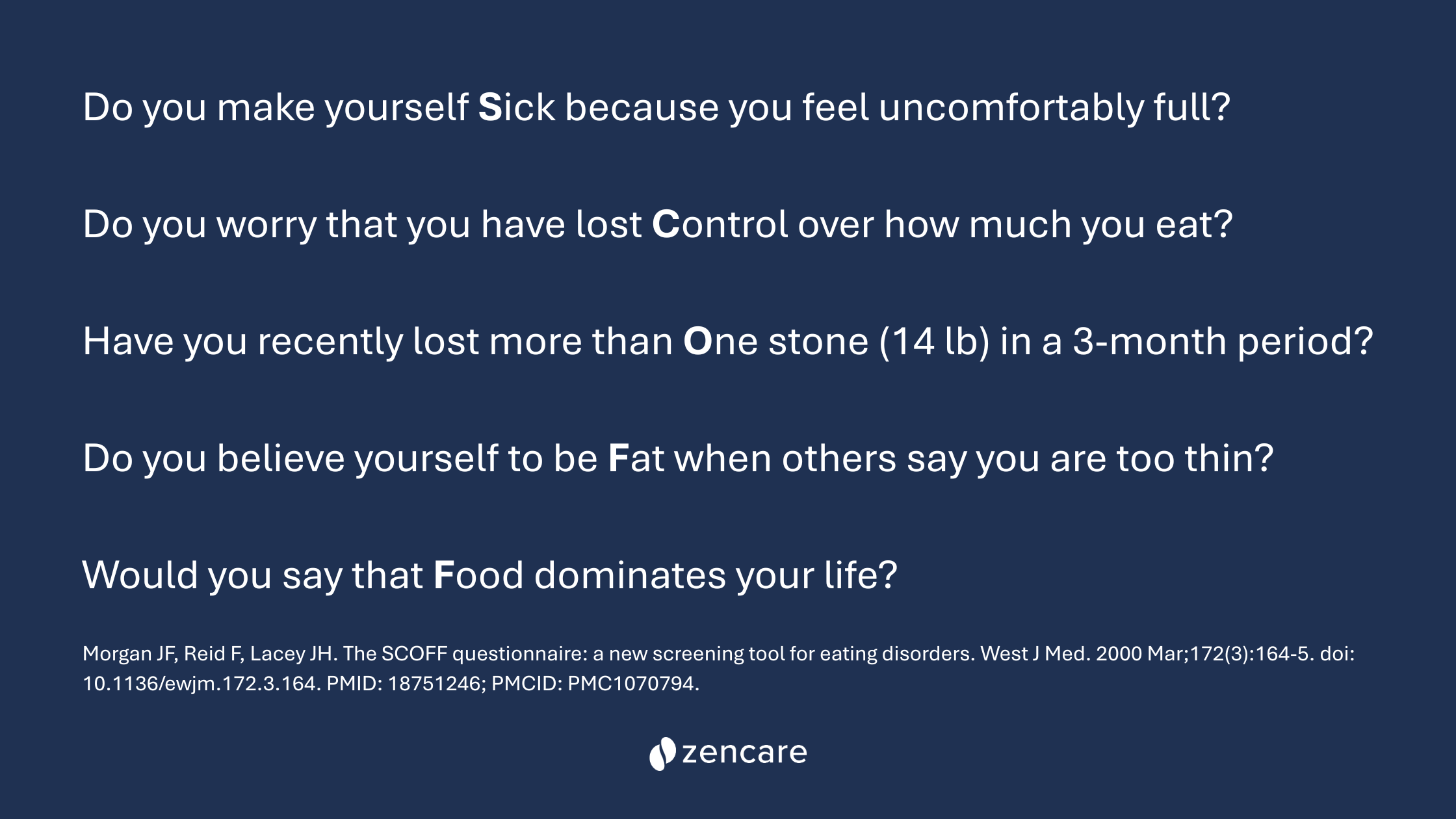
Scoring the SCOFF questionnaire
Each “yes” response to the five yes/no questions on the SCOFF is summed for the total score. Scores of 2 or greater indicate a likely case of an eating disorder (sensitivity: 100 percent; specificity: 87.5 percent). Consult an eating disorder specialist as necessary.
A score of 2 or above indicates the need for further evaluation.
Consider the following actions:
- Conduct a more comprehensive clinical interview exploring eating patterns, body image, and psychosocial factors
- Refer to an eating disorder specialist or treatment program for diagnostic assessment
- Assess for medical complications that may require immediate attention
- Screen for co-occurring mental health conditions (depression, anxiety, trauma)
- Engage the client in a collaborative conversation about treatment options and readiness for change
Remember that screening is only the beginning. A positive screen should prompt compassionate follow-up and connection to appropriate resources and specialized care.
Lily Thrope’s Eating Disorder Awareness Guide shares useful language for discussing clients relationships to food and body image. It also has helpful challenges to some common phrases that clinicians might use that could be unintentionally harming clients who have eating challenges.