Published on March 18, 2026.
Why is schema therapy for borderline personality disorder worth knowing?
If you’re exploring support for borderline personality disorder (BPD), you may recognize how quickly emotions can surge, especially in close relationships. A delayed reply or a subtle tone shift can suddenly feel huge. Schema therapy for borderline can help by working with the deeper patterns underneath these reactions, not just the surface moment. This article is educational, not diagnostic. If it resonates, support is available, and meaningful progress is possible.
Takeaways: Big emotions often have understandable roots. Schema therapy focuses on patterns that repeat, then helps you change them.

What is schema therapy?
Schema therapy is an integrative, evidence-informed approach that blends cognitive behavioral therapy (CBT), attachment-based work, emotion-focused therapy, and experiential techniques. It helps clients identify and shift long-standing patterns.
Core concepts include:
- Early maladaptive schemas: deep templates about self and relationships (for example, “I’ll be left” or “My needs don’t matter”).
- Coping styles: ways you protect yourself, such as avoidance, surrendering, or overcompensating.
- Modes: emotional states that can take the lead in the moment.
Traditional CBT often targets current thoughts and behaviors. Schema therapy still uses those tools, but it also explores why certain reactions keep repeating and uses imagery or chair work to create new emotional experiences that feel real, not just logical.
Takeaways: Schema therapy combines insight, emotional healing, and practical skills. It is built for patterns that feel deeply ingrained.
Why can schema therapy be effective for BPD?
Many people who identify with BPD traits describe emotional intensity, fear of abandonment, relationship ups and downs, impulsive urges, shame, or feeling “too much” or “not enough.”
Schema therapy offers a compassionate explanation: when a schema is triggered (like perceived rejection), it can amplify threat signals and push you into fast protective coping.
Schemas can develop through repeated early experiences like invalidation, inconsistency, unmet emotional needs, or trauma, though everyone’s story is different. In sessions, a therapist helps you name the schema and mode driving the moment, soothe the vulnerable feelings underneath, and strengthen a steadier “healthy adult” response.
Takeaways: Triggers often activate older emotional templates, not just the present event. Schema therapy targets root patterns and builds steadier responses over time.
What schemas commonly show up in BPD?
Schemas are learned patterns, not character flaws. Four that often show up in BPD include:
- Abandonment/instability: strong sensitivity to distance or delays; urges to cling, test, or cut off first.
- Emotional deprivation: expecting your needs won’t be met; feeling alone even with others.
- Unrelenting standards: harsh self-pressure; “If I’m perfect, I’ll be safe.”
- Defectiveness/shame: “Something is wrong with me”; hiding, apologizing, or anticipating rejection.
These can show up as push–pull dynamics, reassurance seeking, people-pleasing, shutdown, anger bursts, or self-criticism spirals.
Takeaways: Naming a schema can reduce shame and increase choice. Patterns are changeable, especially with the right therapist fit.
What are the three modes in BPD, and how can they create a cycle?
Schema therapy often describes BPD through modes:
- Vulnerable child mode: fear, sadness, loneliness, panic, shame, and a strong need for safety.
- Demanding parent mode: rigid “shoulds,” blame, perfectionism, contempt toward vulnerability.
- Angry protector mode: anger, shutdown, sarcasm, cutting off, or impulsive armor.
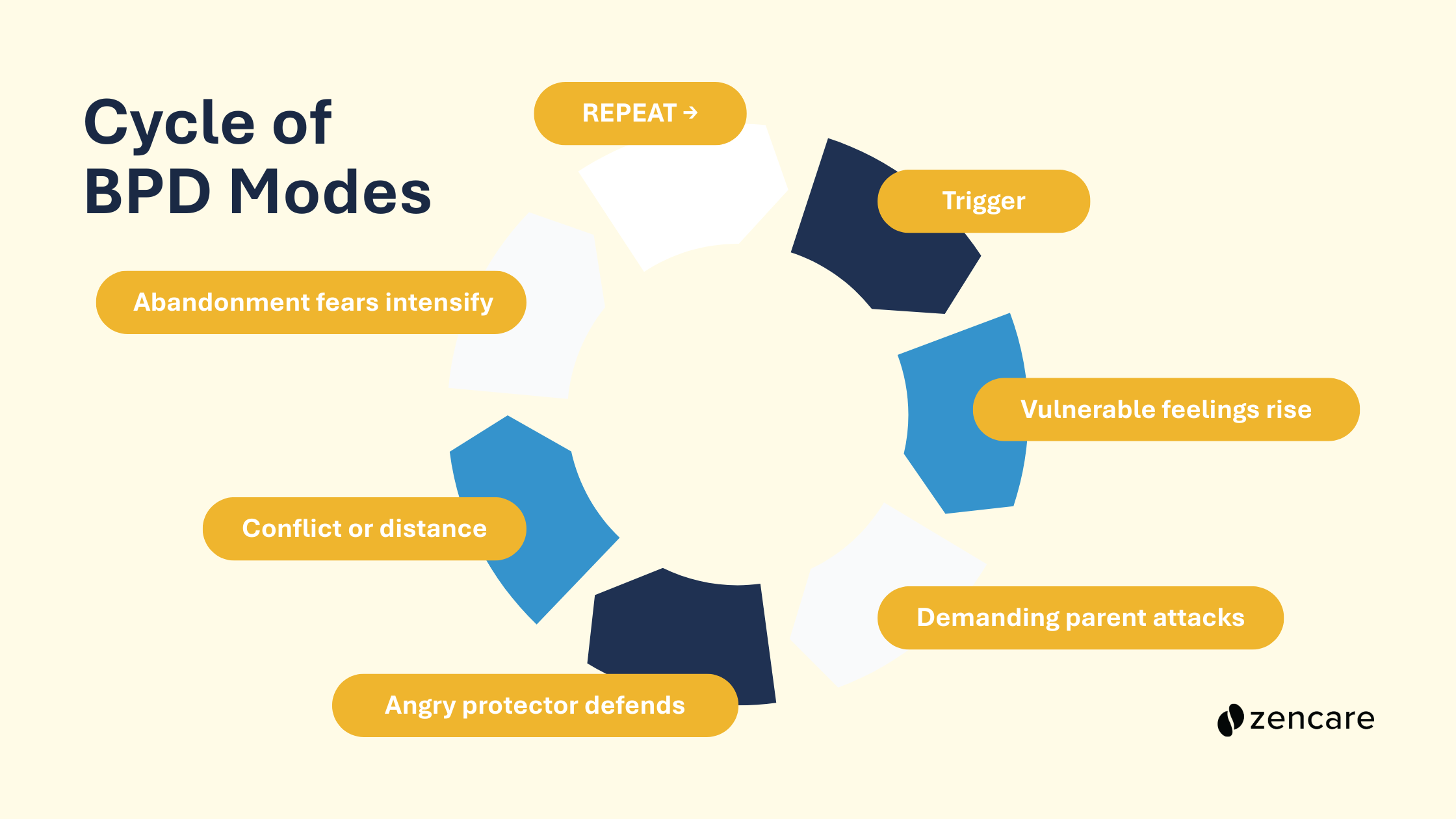
Takeaways: Modes make patterns feel understandable and predictable. Seeing the cycle helps you interrupt it earlier.
What does schema therapy for borderline personality disorder look like in sessions?
Schema therapy is practical and experiential.
Techniques may include:
- Limited reparenting / schema rescuing: within professional boundaries, the therapist offers steadiness, validation, and emotional safety.
- Chair work: separating modes (like vulnerable child vs. demanding parent) to strengthen the healthy adult voice.
- Imagery re-scripting: safely revisiting painful memories and adding protection, comfort, or agency.
- Building healthy adult mode: validating feelings without acting on impulses, setting boundaries, tolerating uncertainty, and asking directly for needs.
Takeaways: Sessions often focus on real-time emotional shifts, not just insight. The goal is a stronger healthy adult mode that can lead with care.
What long-term change can you expect, and how is progress measured?
Schema therapy is often longer-term than brief CBT approaches, especially when the goal is deep relationship change. Many clients notice progress as fewer intense triggers, faster recovery after conflict, less self-criticism, more self-compassion, and clearer boundaries and communication.
Sustaining change may include relapse-prevention planning, healthy adult routines between sessions, and supportive relationships where repair is possible.
Find a schema therapy therapist for borderline personality disorder
Zencare.co can help you find a therapist who is trained in schema therapy and specializes in borderline personality disorder. Use Zencare's filters to find a therapist who is a great match. Use the "Specialty" filter to select "Borderline personality disorder" and the "Approach" filter to select "Schema therapy".