Published January 15, 2026.
Disclaimer: This article reflects trends from Zencare’s platform usage and may not represent nationwide mental health patterns.

Last year we published our first report on mental health, which drew from how therapy seekers use Zencare, to demonstrate what matters most in the evolving world of mental health. The insights of course are not a complete reflection of the U.S. as a whole, but highlight key trends shaping private practice and the mental health landscape.
This year we’re pulling similar data, making comparisons, highlighting trends, making predictions for 2026 — AND presenting our first report on private practice.
Let’s dive into therapist insights!

Table of contents
Click on any item to jump to that section.
What are therapy seekers prioritizing most in 2025?
Today’s therapy seekers are increasingly values-driven, and their search behaviors reflect a deeper emphasis on personal fit. For therapists, understanding how clients are filtering for care, and how these behaviors are evolving, is key to maintaining a client-centered, accessible practice.
In 2025, Zencare user data showed a growing preference for personalization over logistics like insurance. The therapeutic alliance remains central, and many clients are actively seeking providers whose identities, clinical expertise, and session formats align with their lived experiences and goals.
How clients are searching:
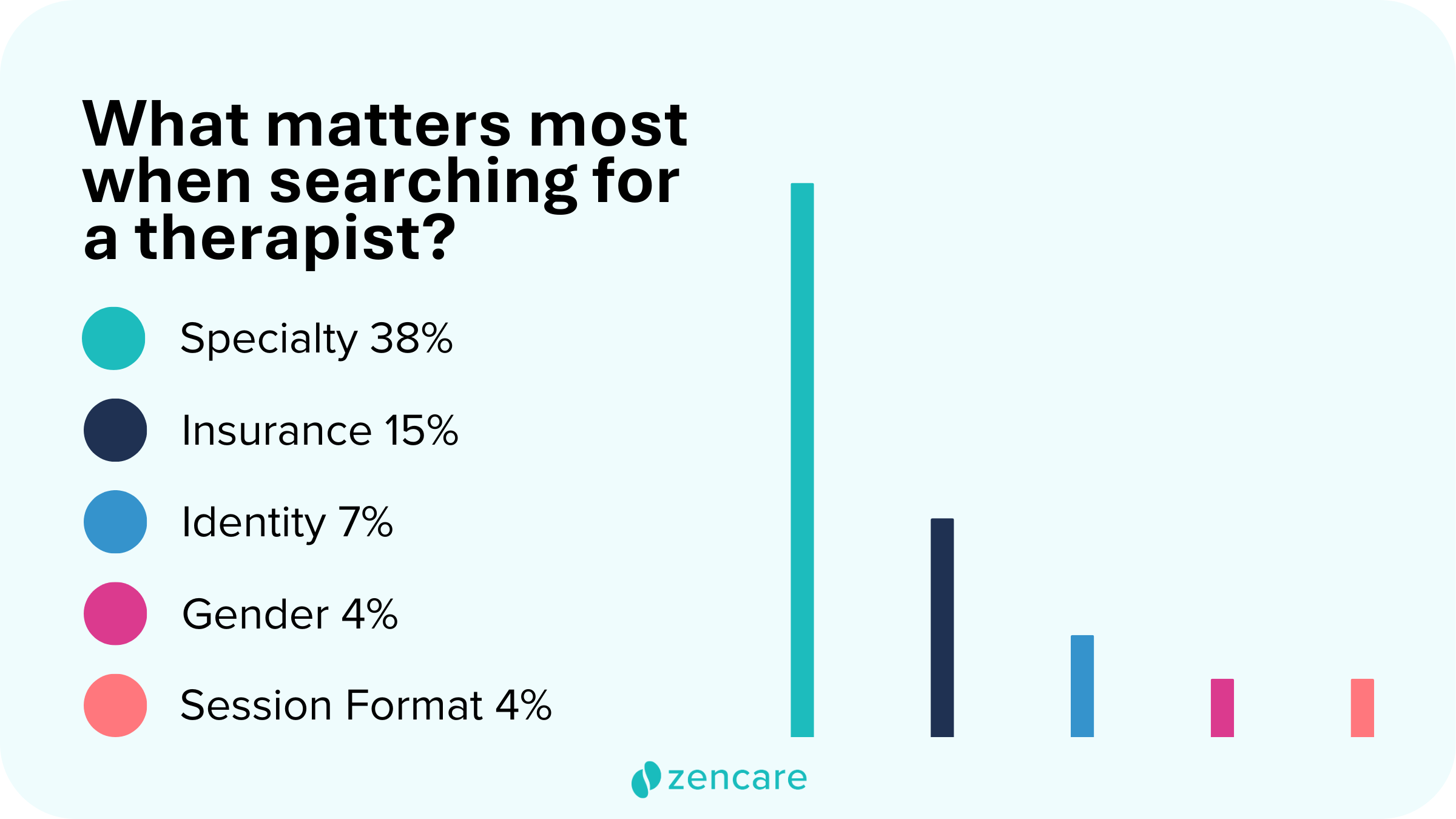
- 38% of users filtered by specialty (for example, anxiety, trauma, relationship issues)
- 15% prioritized providers who accept their insurance
- 7% filtered by identity traits (such as cultural background, gender identity, or LGBTQIA+ affirming care)
- 4% searched by gender
- 4% prioritized online or in-person session formats
Compared to 2024:
- Filtering by specialty rose by 12%
- Interest in identity-aligned care rose by 2%
- Insurance-based filtering dropped 6%
- 47% of therapy seekers were open to going out-of-network

Takeaway: Many clients are willing to pay out-of-pocket if the therapeutic connection feels right. Highlighting your approach, specialties, and lived experience can increase match quality and reduce client drop-off. Be explicit, not generic. Clients are filtering for specificity.
What specialties are most popular?
Therapy seekers continue to present with a wide range of needs, but specialty searches in 2025 point to a few key areas where demand is growing. For therapists, this information can be used to guide continuing education, refine niche marketing strategies, or develop psycho-educational resources that meet clients where they are.
Most searched specialties on Zencare:
- Anxiety (6%): Support for triggers, coping skills, and daily life management
- Depression (5%): Resilience-building, emotion regulation, and healing
- Trauma (4%): Safe, trauma-informed approaches to emotional processing
- Relationship Issues (4%): Communication, boundaries, and attachment work
- Stress (3%): Burnout, life transitions, and overwhelm support
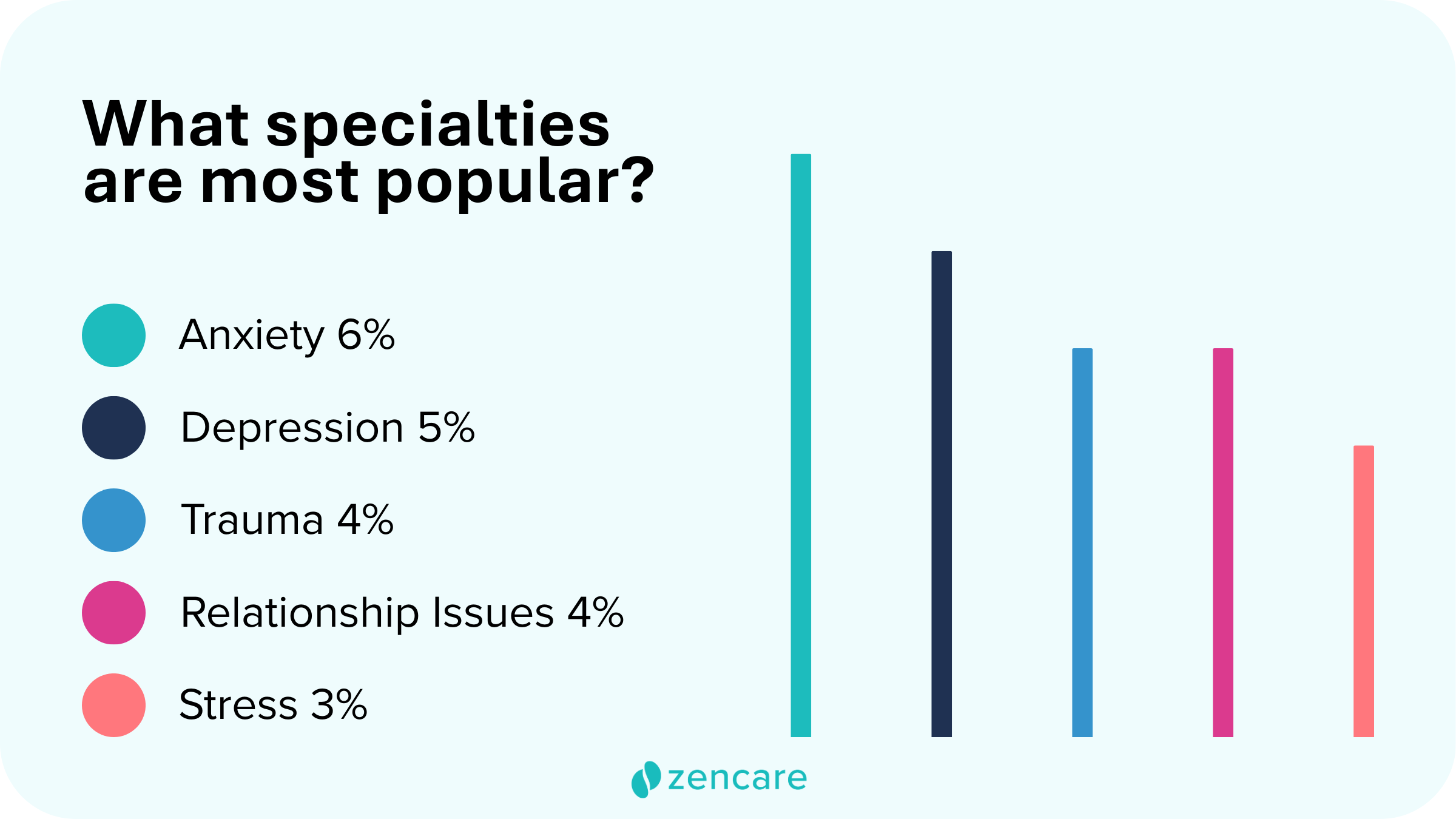
Specialties such as ADHD and couples counseling, which were high in 2024, were overtaken by stress in 2025. This reflects a broader cultural trend; therapy is increasingly seen not just as a response to crisis, but as a proactive tool for overall well-being.
Takeaway: As clients seek help for chronic stress, relationship complexity, and ambiguous emotional distress, therapists may want to expand how they talk about their work. Focus on quality-of-life concerns, not just diagnoses. Revisit your bio or website to ensure you're speaking to the challenges people are actively seeking help for now.
Specialty growth trends in 2025
Therapy interest continues to shift, with more clients seeking targeted, specialized care. The following data offers insight into which clinical areas are gaining traction, and can help therapists assess how their practice aligns with emerging client needs.
Top growth areas by search volume:
- Couples Counseling: 50% increase. Common reasons include communication struggles, cohabitation stress, and relationship repair.
- Life Transitions: 50% increase. Career shifts, parenthood, relocation, and identity changes.
- Stress Management: 40% increase. Burnout, boundary setting, financial stress, and caregiving roles.
- Trauma: 19% increase. Growing awareness around trauma-informed care and nervous system regulation.
- Depression: 30% increase. Emotional numbing, disconnection, and motivation struggles.
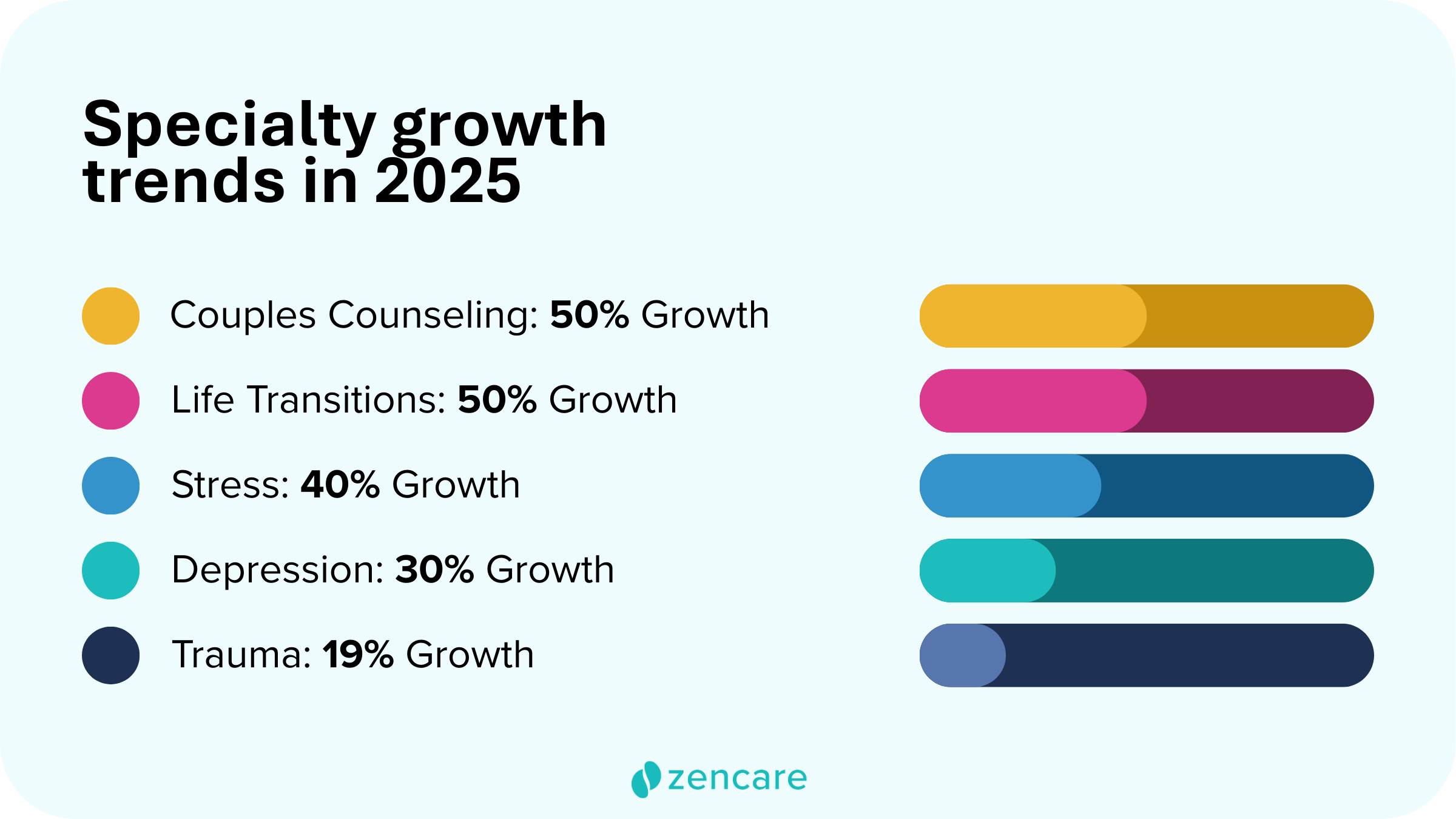
Clients are now approaching therapy not only to resolve clinical issues, but to navigate periods of uncertainty, re-engage with life, and build emotional resilience before reaching a crisis point.

Takeaway: Therapists who specialize in couples work, transitions, or stress management may benefit from revisiting their online profiles to reflect these exact terms. You might also consider writing blogs or offering workshops that speak directly to these growth areas.
What types of therapy are most popular?
Clients are arriving at therapy with a growing awareness of different therapeutic modalities. While referrals and provider credentials remain important, more therapy seekers are arriving with specific approaches in mind. This shift is due in part to broader mental health conversations in the media, increased self-education online, and word-of-mouth from peers who have had positive experiences with particular therapy types.
In 2025, Zencare users showed increased curiosity and engagement with a wider variety of therapy modalities. While some methods like CBT remain foundational, there is rising interest in trauma-focused and parts-based approaches, as well as somatic and body-integrated modalities.
Most searched therapy types on Zencare:
- Cognitive Behavioral Therapy (CBT) (4%): Clients continue to seek out CBT for its structured, goal-oriented approach that focuses on reframing unhelpful thought patterns and building coping skills.
- Eye Movement Desensitization and Reprocessing (EMDR) (4%): As trauma awareness increases, EMDR has grown in visibility.
- Internal Family Systems (IFS) (2%): More clients are exploring IFS to understand internal dynamics, particularly those dealing with inner critics, shame, or parts-based experiences of trauma.
- Dialectical Behavior Therapy (DBT) (1%): DBT continues to appeal to those needing structured emotion regulation support, especially clients navigating high sensitivity or relational instability.
- Somatic Therapy (1%): As embodied approaches gain traction, clients are showing interest in working with therapists who integrate body awareness into trauma and stress work.
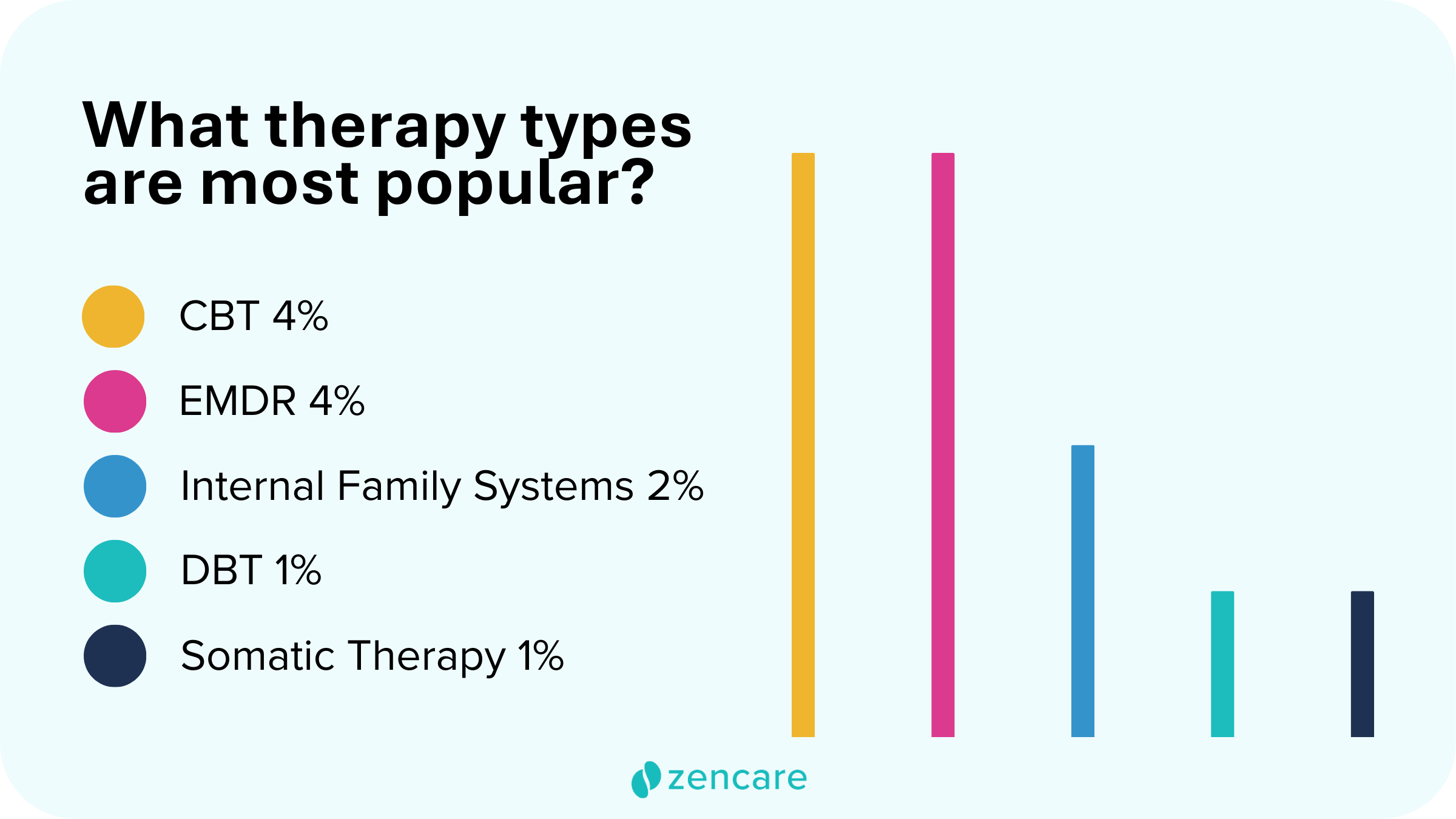
Although the overall search percentages for therapy modalities are relatively low, the takeaway is clear. Clients are increasingly aware of their options and are exploring methods that align with their specific challenges, values, or learning styles. Public figures and media coverage are also contributing to this shift, people are able to put a name to therapy types and the outcomes that align with them.

Takeaway: Clients are not only seeking therapists who specialize in their presenting issue but are also paying attention to the modality used. To support this shift, therapists may consider offering psycho-education on their approach in their bios or websites. Using accessible, jargon-free language can help demystify therapeutic methods and bridge the gap between clinical language and client understanding. If you use a niche or emerging modality, consider highlighting it with a brief explanation or example of what a session might look like.
What identity traits are most popular and impact client choice?
In recent years, therapy seekers have increasingly expressed interest in working with therapists who share, reflect, or affirm aspects of their identity. This trend continued in 2025, with identity-based filtering remaining an important factor in how clients search for care.
Clients often report that working with a therapist who shares their cultural background, gender identity, religion, or lived experience helps them feel more understood and less burdened by the need to explain cultural nuance. For some clients, especially those who have experienced marginalization or cultural invalidation, these connections can be critical in establishing trust and safety in the therapeutic relationship.
At the same time, the data reveals a complex picture. While a significant number of clients still filter for identity-based preferences, this behavior appears to be leveling off in some areas.
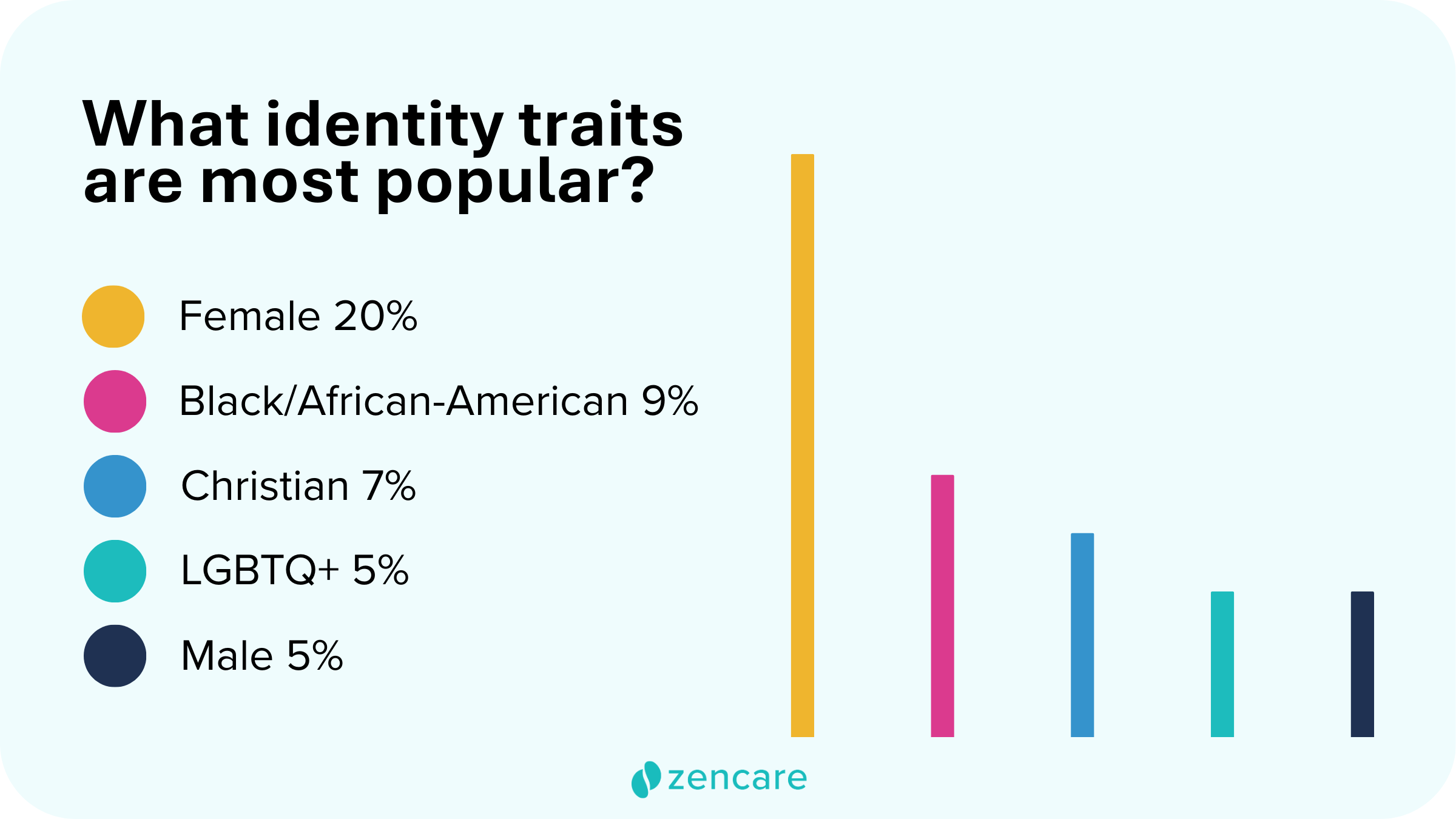
Therapist identity preferences on Zencare:
- 20% searched for therapists identifying as female
- 9% searched for therapists identifying as Black or African-American
- 7% searched for therapists identifying as Christian
- 5% searched for therapists identifying as LGBTQ+
- 5% searched for therapists identifying as male
- 11% searched for therapists with a diverse ethnic background
Notably, 11% of therapy seekers filtered for a therapist with a diverse ethnic background. This represents a significant decrease from 2024, when 35% of users applied the same filter. While the number has declined, this does not necessarily suggest that identity is less important to clients. It may reflect a growing baseline expectation that therapists will offer culturally responsive care, regardless of shared background.
Takeaway: Therapists should be aware that identity continues to play a meaningful role in how clients assess potential fit. While not every client seeks a provider who shares their identity, many prioritize cultural humility, affirming language, and an awareness of lived experience. Even for therapists who do not share a client’s identity, communicating a commitment to safe, affirming care can go a long way in helping clients feel seen.
When and where are people seeking therapy?
Understanding when and how therapy seekers engage with services can help therapists align availability, scheduling, and marketing strategies to better match client behavior.
Key patterns in client searches:
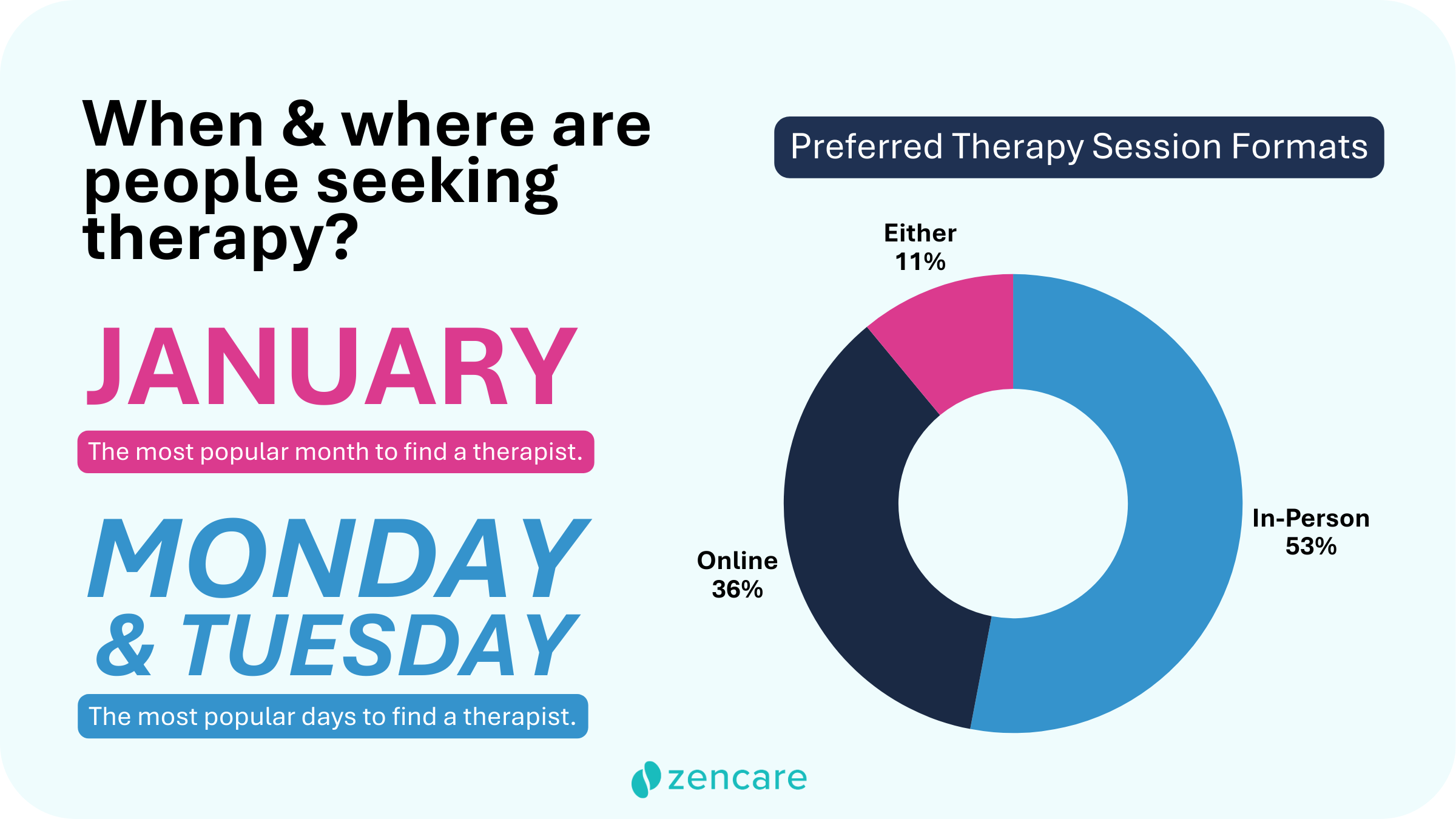
- January remains the highest-traffic month for therapist searches. This timing aligns with seasonal transitions and New Year’s resolutions. Many clients are motivated to start therapy at the beginning of the year, when they are setting goals and seeking a sense of renewal. Insurance providers also often change for therapy seekers in January, prompting them to take advantage of mental health coverage or needing to find a new therapist in-network.
- Mondays and Tuesdays are the most active days of the week for therapy-related searches. This may be driven by weekend reflection or a desire to reset and plan for the week ahead.
These patterns have remained consistent over the past two years, suggesting that therapists may benefit from syncing outreach or onboarding efforts with these seasonal and weekly rhythms.
Session format preferences:
- 36% of therapy seekers looked specifically for online therapy
- 53% searched for in-person sessions
- 11% had no preference between formats
This represents a continued shift from 2024:
- Online therapy preference increased by 9%
- In-person preference decreased by 11%
- No-preference responses rose by 2%
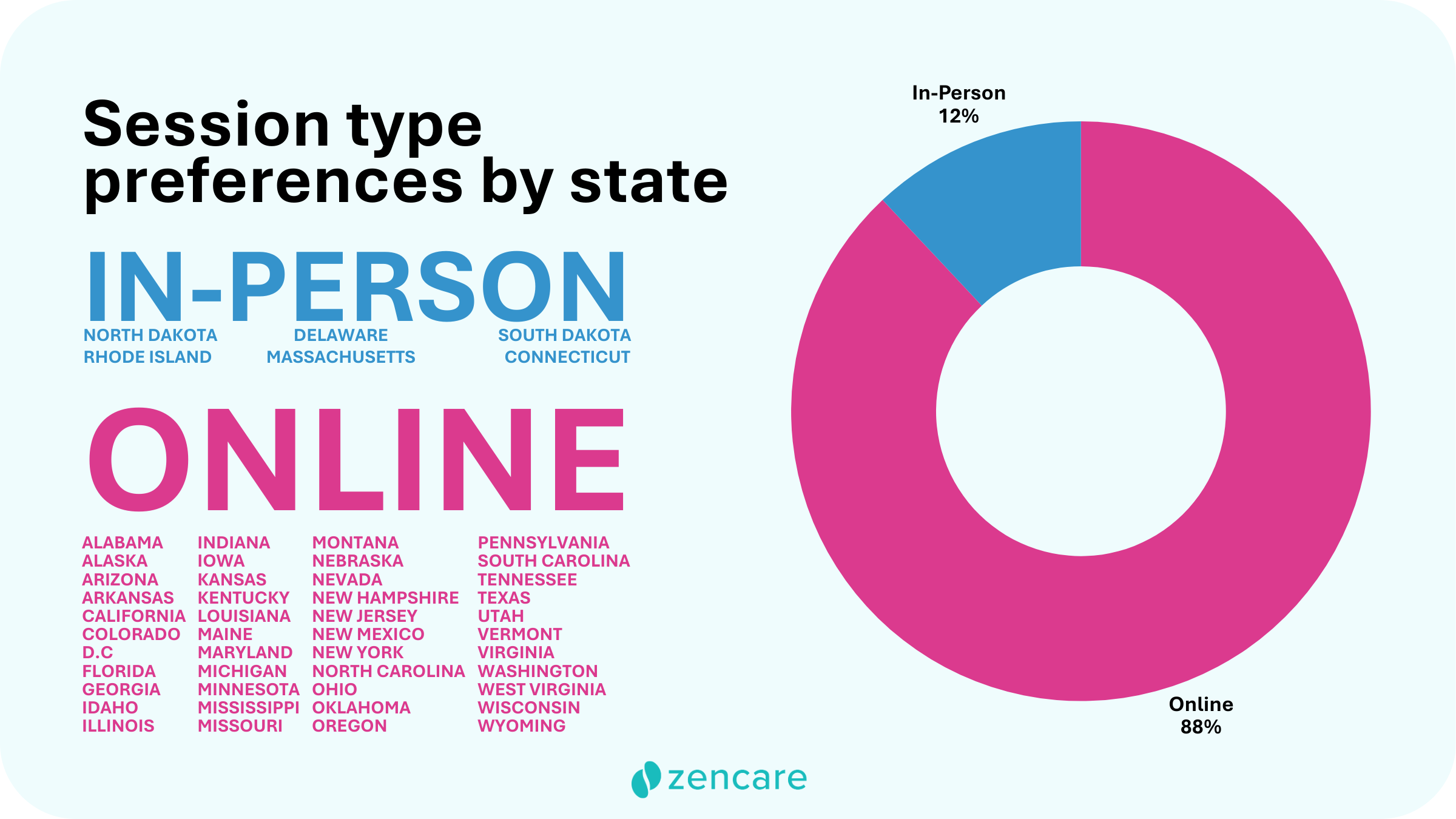
Session type preferences by state
Certain states showed stronger preferences for in-person care, while others had a more balanced interest.
Primarily in-person states:
- Delaware
- Massachusetts
- North Dakota
- Rhode Island
- South Dakota
50/50 preference states:
- Arizona
- Colorado
- Connecticut
- District of Columbia
- Washington

Takeaway: Client behavior suggests a strong demand for flexibility and convenience, especially in states with more rural areas or limited in-person availability. Therapists who can offer hybrid or fully remote options may reach a broader audience. Additionally, consider planning availability boosts or marketing updates in early January and early in the week, when client engagement is at its highest.
How are men seeking therapy?
While therapy has historically been underutilized by men, 2025 data points to a gradual but steady shift. More men are seeking therapy, and there is growing interest in services that are sensitive to male-specific mental health concerns, emotional expression, and stigma reduction.
Key trends:
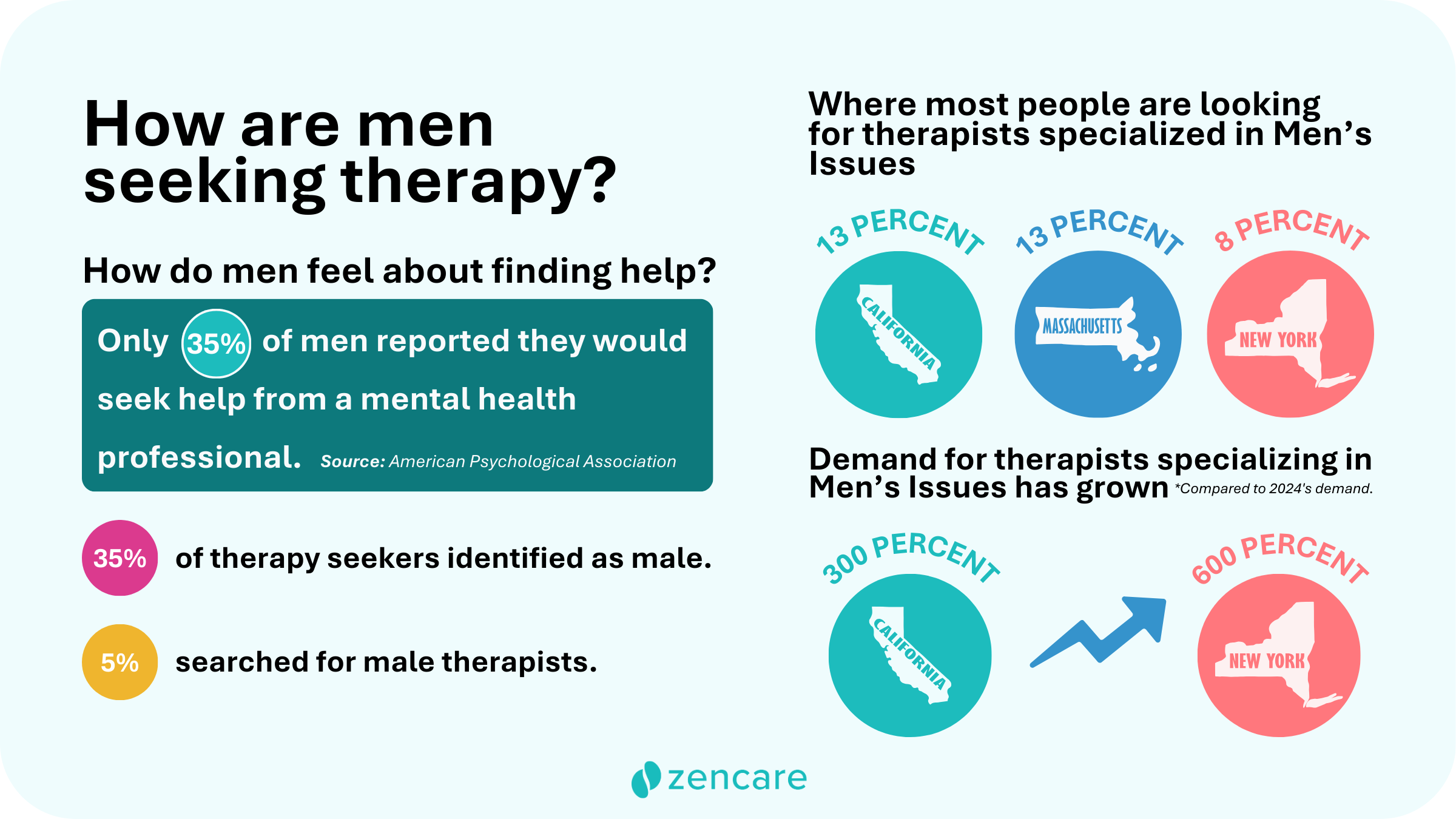
- 35% of Zencare therapy seekers in 2025 identified as male, up from 34% in 2024
- 5% of male therapy seekers searched specifically for male-identifying therapists, a decrease from 7% in 2024
This decline may reflect increasing comfort with seeing providers of any gender, or it could signal a shift in how men are defining therapeutic fit — with approach and tone taking priority over gender match.
Top states for “Men’s Issues” specialty searches:
- California: 13%
- New York: 13%
- Massachusetts: 8%
Searches related to “Men’s Issues” have grown significantly:
- 300% increase in California
- 600% increase in New York
This indicates a strong geographic trend in both demand and public awareness. The most common concerns among male clients include emotional suppression, loneliness, relationship strain, and work-related stress.
Takeaway: Therapists who work with men should consider how their materials speak to this audience. Terms like “men’s mental health,” “emotional intelligence,” and “masculinity” may help reach clients who are searching for permission and language to explore their emotional world. As stigma around men’s emotional health decreases, more male clients are likely to seek therapy, especially in high-demand areas like New York and California.
Which states are leading therapy trends?
State-by-state data shows meaningful differences in access, engagement, and demand. This information can help therapists assess where their services are most needed and consider options like teletherapy expansion or multi-state licensure.
Highest therapist-to-therapy seeker ratios:
These states have the strongest access to therapists relative to demand.
Higher ratios often reflect strong provider networks, urban density, and broader insurance acceptance. These states may also have more robust mental health infrastructure and graduate training pipelines.
Most appointments made:
These states show the highest levels of client engagement.
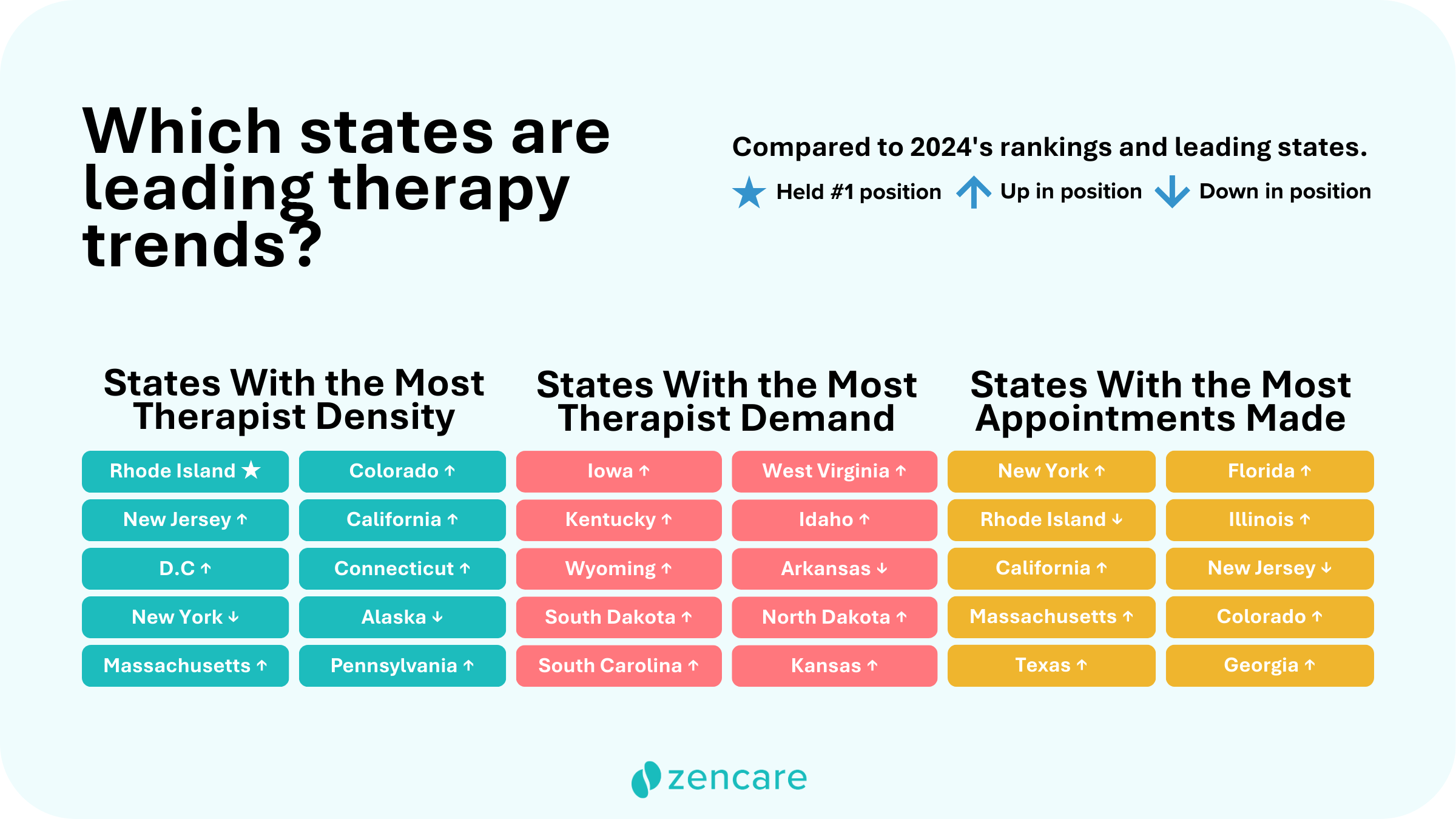
Increased appointment rates suggest greater acceptance of therapy, better access to care, or more provider availability.
States with the highest demand:
These states show high demand, often without enough therapist supply to meet it.
Approximately 80% of these are rural or semi-rural states. Lower therapist density, stigma, and infrastructure limitations may all contribute to the gap between need and access.

Takeaway: Therapists with multi-state licenses or telehealth capabilities may want to consider expanding their services to high-demand, under-resourced states. These regions offer an opportunity to reach therapy seekers who may have fewer local options but are actively looking for support.
What is the cost of therapy by state?
Therapy costs continue to vary widely depending on location, provider experience, session format, and insurance participation. In 2025, the average therapy rate rose nationally by approximately 7%, though some states saw rate decreases.
Understanding how your rates compare can help therapists assess their pricing strategy, consider sliding scale options, or prepare for client conversations around affordability.
States with the highest therapy cost increases:
- Colorado: 16.77% increase
- Alabama: 15.34% increase
- Tennessee: 13.66% increase
- Utah: 12.43% increase
- Texas: 11.98% increase
States with the lowest therapy cost increases:
- Alaska: 13.5% decrease
- Delaware: 7.32% decrease
- Virginia: 3.76% decrease
- Michigan: 2.27% decrease
- Ohio: .58% decrease
Takeaway: Therapists should review regional pricing trends to ensure their rates are sustainable and aligned with local market conditions. If your practice operates across multiple states, or offers virtual services, a flexible pricing model may improve accessibility. Consider clearly stating whether you offer sliding scale, accept insurance, or provide therapy packages to support transparency and attract aligned clients.
Client intake trends in 2025
On a Zencare profile, you have the option to allow potential clients to either complete an intake form by booking a free consultation appointment, or messaging you.
In 2025, we saw across all Zencare profiles that:
- Booking intake forms had a 73.7% completion rate
- Message intakes had a 40.4% completion rate
This indicates that therapy seekers who can book a consultation are more motivated to take that first step.
When we looked at therapist response times, we found that:
- On average, therapists take 28 hours to respond to initial client intake messages
- The fastest response time was 12 minutes
Therapist response time also plays a meaningful role in client engagement. Prompt replies can set the tone for trust and follow-through from the very beginning.

Takeaway: Make it easy to take the first step. In 2025, therapy seekers were significantly more likely to follow through when they could book a consultation directly through a therapist’s Zencare profile. This suggests that when the path to starting therapy is more structured and action-oriented, clients are more likely to commit.
Thank you for responding to crises 2025
In 2025 there were two major events in the US that you showed up for — and we could not be more thankful for the support of the Zencare community.
Los Angeles Wildfires
In January, the wildfires in the Palisades and Eaton burned for days. The Palisades fire ranks as the 9th-deadliest wildfire and 3rd-most destructive. The Eaton fire ranks as California’s 5th-deadliest wildfire and 2nd-most destructive.
We reached out for help, and the response was overwhelming. Over 170 therapists volunteered their time and expertise, and signed up for our public list of therapists available to support those affected by the fires in Los Angeles. Many of you shared the signup link with colleagues, shared resources posts on social media and some of you even sent kind personal notes to our team.
Brown University Shooting
In December, a shooting at Brown University during finals week devastated the school’s community. Brown University and the surrounding communities was where Zencare made its first connections and grew, so the school holds a special place in our hearts.
We reached out for help again, and the response we received was overwhelming once more. Over 150 therapists volunteered to provide support to those affected by the shooting at Brown University. Many of the therapists that signed up also had personal ties to Brown, and were incredibly eager to help.
Thank you so much for volunteering your time, your sessions, your expertise to those who were affected by these horrible events. We are incredibly grateful to be part of a community that shows up for others like this.
What trends do we predict for 2026?
As demand for therapy continues to grow, therapists across the country are navigating a shifting landscape shaped by client behavior, policy changes, technology, and evolving public awareness. Based on 2025 trends, we anticipate several developments in 2026 that will directly impact how therapists deliver care, expand access, and structure their practices.
1. Multi-state licensure will expand to meet demand
In response to growing regional gaps in care, more therapists are likely to pursue multi-state licensure through PSYPACT, the Counseling Compact, or individual applications. Clients in rural and under-resourced states are increasingly turning to telehealth, and therapists with the ability to work across borders will be better positioned to meet this need.
If you’re based in a Compact state, this may be a good time to explore licensure expansion. Teletherapy allows for flexible caseloads and can connect you to clients in high-demand areas without requiring relocation.
2. Rural areas will see more investment in virtual care
States with limited in-person therapy access, particularly in rural regions, are expected to increase investment in telehealth infrastructure and community outreach. Improved internet access and public education may help reduce barriers and stigma in these areas.
If your practice is virtual, consider how you present services to rural clients. Highlight privacy, convenience, and flexibility, especially for those seeking therapy for the first time or without local options.
3. Mental health tech will shape client expectations
AI tools and self-guided mental health apps are becoming more common as clients explore emotional support outside traditional therapy. While not replacements for care, these tools often serve as entry points or adjuncts.
Clients may arrive with questions or assumptions shaped by these technologies. Being prepared to discuss their role, and clarify what licensed therapy offers, can strengthen rapport and provide direction.
4. Therapy will be used more proactively
Therapy is increasingly seen as a space for reflection and personal growth, not just crisis intervention. More clients are seeking support for burnout, transitions, identity, or relationship dynamics without meeting diagnostic criteria.
Therapists can reflect this shift by using inclusive, wellness-oriented language in their bios and websites. Framing therapy as preventive or exploratory can attract clients earlier in their process.
5. Out-of-network therapy will continue to rise
Nearly half of therapy seekers on Zencare in 2025 searched without using insurance filters. Clients are prioritizing therapist fit, identity alignment, and specialized modalities over network status.
If you’re an out-of-network provider, transparency around fees, reimbursement, and the value of your services helps clients make informed decisions. A clear intake process and detailed service descriptions can also reduce barriers for those paying privately.

Thank you for supporting mental health in 2025
As we look back on the trends and insights of 2025, one thing is certain: the role of therapists has never been more vital, or more visible. This past year, therapy seekers showed up with clarity, curiosity, and intention, and you met that demand with care, expertise, and deep commitment.
Whether you refined your specialties, embraced teletherapy, supported underserved communities, or simply showed up consistently for your clients, your work shaped the growth we saw across the mental health space. You helped normalize proactive care, created safe spaces for identity exploration, and responded with flexibility to evolving client needs.
At Zencare, we’re honored to support your work by sharing tools, data, and insights that keep you connected to the clients and communities who need you most. Your presence, both online and in-person, makes a difference.
Here’s to another year of meaningful connection, continued learning, and expanding access to care in 2026. Thank you for everything you do.